
Bamboo charcoal air fresheners can help manage odors and mild moisture in your vehicle, but they are not a magic cure-all. The extreme humidity and intense cabin heat of a car parked outdoors in Singapore present unique physical challenges. These environmental factors can quickly saturate the charcoal, reducing its effectiveness and requiring frequent maintenance to keep your cabin smelling fresh.
How Heat and Humidity Affect Bamboo Charcoal in Cars
Bamboo charcoal operates on the principle of adsorption, a physical process where gas and moisture molecules adhere to the surface of microscopic pores within the charcoal. Unlike absorption, where a substance is drawn into the bulk of a material, adsorption relies entirely on available surface area. In a tropical climate where relative humidity levels frequently exceed 80%, the air is heavily saturated with water vapor, presenting a constant challenge for these passive fresheners.
Water molecules are highly polar and abundant in humid air, meaning they compete directly with odor-causing volatile organic compounds (VOCs) for the limited pore space. When a vehicle is parked in these conditions, the charcoal pores can quickly fill with water vapor. This saturation leaves very little remaining surface area to trap food smells, sweat, or musty cabin odors, temporarily reducing the air freshener’s deodorizing efficiency.
Products mentioned in this guide

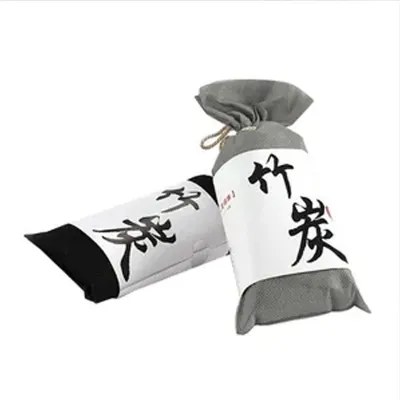
![[SG] 500g Activated Bamboo Charcoal Bag Pouch Dehumidifier Deodorizer Car Household Remove Formaldehyde Freshener Bag](https://img.lazcdn.com/g/p/dda71344eefd8735ed7f9d3e072ae3e1.jpg_400x400q80.jpg_.webp)
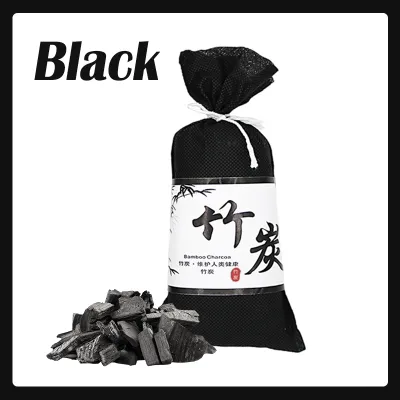
![[SG Stock]100g/200g/250g Fabric Bag Bamboo Charcoal Natural Air Purifier Remove Odours and Moisture Air Freshener](https://img.lazcdn.com/g/p/1292d698f56a1ff4b894f4c44c9919a4.jpg_400x400q80.jpg_.webp)

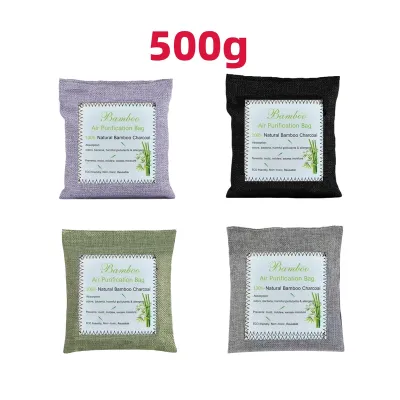
![[SG STOCK] Bamboo Charcoal Bag Deodorizer for Shoe Cabinet Car Absorb Moisture Air Freshener Odour Remover](https://img.lazcdn.com/g/p/8fdd36af81d002c5b31dd5b4c68d8f0a.jpg_400x400q80.jpg_.webp)
Prices are valid at publication and may change. Please refer to the product page for the latest price.
The challenge intensifies when a car is parked outdoors under direct sunlight, where cabin temperatures can easily climb above 60°C. This extreme thermal energy increases the kinetic movement of the molecules trapped within the charcoal’s pores. If the charcoal has already reached its moisture capacity, this high heat can trigger desorption—a process where the thermal energy breaks the weak physical bonds holding the trapped odors and moisture, potentially releasing them back into the cabin air.
To manage this, drivers must learn to recognize the observable signs of a saturated charcoal bag. A bag that has reached its limit will often feel noticeably heavier or slightly damp to the touch. You may also notice that previously neutralized odors suddenly return, or that the bag itself begins to emit a faint, musty smell, indicating that it can no longer hold any more moisture or odor molecules.
Choosing and Placing Bamboo Charcoal for Maximum Airflow
To maximize the effectiveness of bamboo charcoal in a humid car cabin, the physical design of the product is just as important as the material itself. The outer packaging must feature high breathability to allow passive air exchange. Natural fabrics such as linen, burlap, or high-porosity non-woven materials are ideal because their loose weave allows air to flow freely into the charcoal core. Tightly woven synthetic fabrics or bags with decorative plastic backings should be avoided, as they restrict air contact and limit the charcoal’s ability to interact with the cabin air.

The size of the charcoal granules inside the bag also plays a role in how quickly it can process odors. Smaller granules provide a larger total surface area for a given volume, which can lead to faster adsorption of sudden odors. However, very fine granules require a highly secure inner lining to prevent fine black dust from escaping and staining your car’s seats or carpets. Larger charcoal pieces or briquettes offer a slower, more gradual adsorption rate but are less prone to dust leakage and are often more structurally stable over long periods.
Strategic placement within the vehicle is essential to ensure adequate airflow while maintaining safety. For optimal passive air circulation, place the charcoal bags in areas where cabin air naturally moves, such as under the front seats, inside door pockets, or secured to the back of the headrests. These locations keep the bags out of direct sunlight while allowing them to intercept ambient moisture and odors.
Safety must always be the primary consideration when positioning any accessory in your vehicle. Never place charcoal bags on top of the dashboard or the rear parcel shelf, where they can obstruct your line of sight or become dangerous projectiles in the event of sudden braking. Additionally, ensure that bags placed on the floor are securely tucked away so they cannot slide into the driver’s footwell and interfere with the brake, clutch, or accelerator pedals.
Maintenance and Reactivation in a Tropical Climate
Unlike synthetic air fresheners that must be discarded once they lose their scent, bamboo charcoal can be reactivated and reused. In a persistently humid environment, regular reactivation is necessary to clear the pores of accumulated moisture and restore the charcoal’s adsorption capacity. This process relies on solar energy to drive out the trapped water molecules and volatile compounds.
To reactivate the charcoal, place the bag in direct sunlight on a hot, dry day. The combination of solar heat and ultraviolet (UV) radiation helps break down organic odor molecules and evaporates the trapped moisture. Rather than relying on a strict hourly schedule, which can be unreliable due to changing cloud cover, determine readiness by performing simple physical checks. The outer fabric of the bag should feel completely dry and crisp, and any lingering musty smell should be entirely gone.
Before returning the reactivated bag to your vehicle, conduct a thorough visual and tactile inspection to ensure it remains safe for use. Examine the seams and fabric of the bag for any signs of fraying, thinning, or structural breakdown. Gently squeeze the bag to check the consistency of the charcoal inside; if the contents feel clumped, hard, or muddy rather than loose and granular, the internal structure has degraded due to prolonged moisture exposure.
If the bag fails these checks, or if a persistent musty odor remains even after a full day of sun exposure, the charcoal has reached the end of its useful life. Attempting to continue using a degraded bag can lead to dust leakage or mold growth. When these indicators are present, the product should be safely disposed of and replaced with a fresh unit to maintain a clean cabin environment.
Complementary Odor and Moisture Control Strategies
While bamboo charcoal is an effective tool for daily maintenance, it may not be sufficient to handle severe moisture buildup or deep-seated odors on its own. In cases of extreme dampness—such as during the monsoon season or after a window has been left open during a downpour—combining charcoal with a dedicated chemical moisture absorber can provide more robust protection. Calcium chloride-based absorbers are highly effective at pulling large volumes of water from the air, but they must be used with caution.
As calcium chloride absorbs moisture, it dissolves into a highly corrosive liquid brine. If you choose to use these absorbers in your vehicle, ensure they are placed in a stable, upright container that cannot tip over during turns or sudden stops. A spill can cause severe damage to your car’s carpets and accelerate the corrosion of under-seat electrical connectors and wiring.
Addressing the root causes of cabin odors is also essential for long-term freshness. Damp floor mats should be removed from the vehicle and thoroughly dried in the sun, and any spilled liquids on the upholstery should be cleaned immediately using products authorized by your vehicle manufacturer for that specific material. Additionally, a musty smell coming from your air conditioning vents often points to mold growth on the evaporator core, which is caused by condensation.
Regularly replacing your cabin air filter according to your vehicle’s service manual can help reduce the buildup of organic matter that feeds mold. If a persistent, sour odor remains despite using charcoal and cleaning the interior, it may indicate a deeper issue within the ventilation system or a clogged evaporator drain line. In such scenarios, consult a qualified automotive professional to perform a professional air conditioning system service or a deep interior steam cleaning.
Frequently Asked Questions (FAQ)
Is it safe to leave bamboo charcoal in a parked car under direct sunlight?
Yes, bamboo charcoal itself is highly stable and has an extremely high ignition temperature, meaning it poses no fire hazard when left in a hot vehicle cabin. However, the outer packaging and mounting accessories require careful attention. Prolonged exposure to intense UV radiation and high cabin temperatures can degrade synthetic fabrics, stitching, elastic bands, or plastic hanging clips, causing them to become brittle and break over time. To prevent premature wear, avoid hanging charcoal bags directly from the rearview mirror where solar exposure is most intense, and instead place them in shaded areas like door pockets or under the seats.
How can I tell if my bamboo charcoal bag has developed mold?
Mold thrives in warm, damp, and unventilated environments, making a saturated charcoal bag in a parked car susceptible to contamination if left unchecked. To identify mold, inspect the outer fabric bag for small black, green, or white spots, or a fuzzy surface texture. You should also rely on your sense of smell; a moldy bag will emit a distinct, sharp, earthy, or sour odor that does not dissipate. If you suspect mold has developed on or inside the bag, do not attempt to wash or sun-dry it, as this can spread mold spores throughout your cabin. The entire bag should be sealed in a plastic bag and disposed of immediately.

Community discussion
Share your experience or ask a question. Comments are reviewed before publication.