
Choosing a premium motorcycle helmet often leads riders to a classic debate: Arai versus Shoei. Both of these Japanese manufacturers have spent decades establishing themselves at the pinnacle of rider protection, earning stellar reputations on both local streets and international racetracks. Their products are frequently seen on professional racers in MotoGP and WorldSBK, serving as high-speed laboratories where safety technologies are refined before trickling down to everyday street riders.
However, their engineering teams approach rider safety, head ergonomics, and comfort from fundamentally different perspectives. Neither brand is universally superior to the other; instead, they represent distinct design paths. The right choice for your rides depends entirely on your unique head shape, your riding discipline, and which impact management philosophy aligns with your personal preferences. By examining how each manufacturer designs, builds, and fits their helmets, you can identify the option that offers the best protection and comfort for your journeys.
Core Design Philosophies: Glancing Off vs. Energy Absorption
The most profound difference between these two industry giants lies in how they manage impact forces during an accident. Arai adheres strictly to their R75 shape philosophy. This design principle dictates that the helmet shell must maintain a continuous curve radius of at least 75 millimeters, resulting in a remarkably round, smooth, and strong exterior. The goal is to “glance off” obstacles during a slide, minimizing the rotational forces transmitted to the rider’s head and neck rather than catching on uneven surfaces.
Products mentioned in this guide
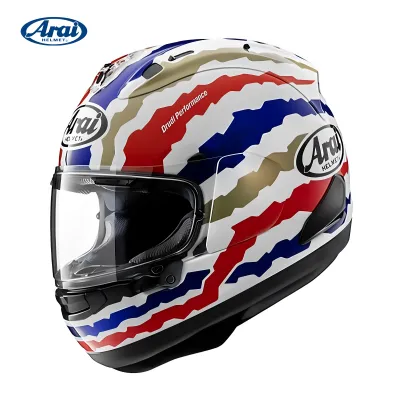
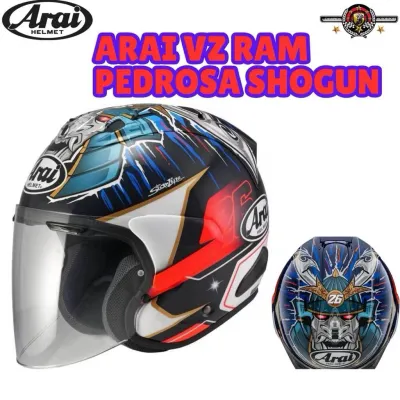
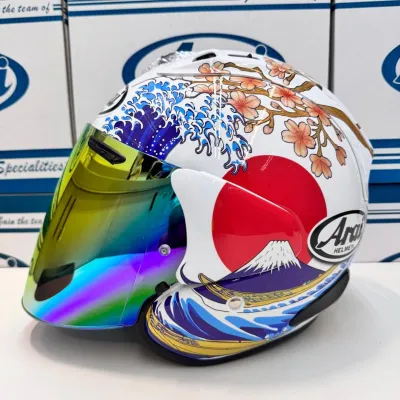
Prices are valid at publication and may change. Please refer to the product page for the latest price.
To complement this round shell, Arai utilizes a single-piece, multi-density Expanded Polystyrene (EPS) liner. By chemically bonding different densities of EPS into a single inner shell, they ensure that each area of the helmet has the precise level of impact absorption required. This approach keeps the outer shell as compact and round as possible, prioritizing the prevention of rotational binding during real-world accidents.
Shoei, conversely, utilizes their Advanced Integrated Matrix (AIM) approach, which prioritizes structured energy absorption. Shoei shells are engineered with complex, multi-layered structures designed to crush progressively upon impact. This controlled deformation works in tandem with their multi-piece, multi-density EPS liner system to absorb and dissipate kinetic energy before it reaches the skull. This philosophy allows Shoei to incorporate more complex aerodynamic shapes, spoilers, and ridges directly into the shell design.
It is important to understand that both methodologies are highly effective. Both brands subject their helmets to rigorous testing to meet or exceed international safety standards, such as ECE and Snell certifications. The difference is not a matter of basic safety compliance, but rather a divergence in engineering theory regarding how to best mitigate real-world crash forces.
Fit and Head Shape Profiles
A helmet can only protect you effectively if it fits your head correctly without creating painful pressure points. Arai addresses the vast diversity of human skull shapes by offering multiple distinct interior profiles across their product lineup. Depending on the model, you can choose between Round Oval, Intermediate Oval, and Long Oval shapes. This specialized approach ensures that riders with longer or wider heads do not have to compromise on safety or comfort to find a secure fit.

Shoei takes a different path, typically optimizing specific helmet models for regional market head shapes. Instead of offering three distinct shell shapes for a single riding style, Shoei utilizes highly adjustable, multi-density EPS liners and customizable interior comfort paddings. Their cheek pads and center pads can often be swapped for thicker or thinner versions, allowing riders to fine-tune the interior fit to match their facial structure.
When evaluating fit, you must also consider how the helmet’s interior comfort liner will “break in” over time. Brand new helmets should fit snugly, as the foam padding will compress slightly after several hours of riding. If a helmet feels perfectly loose in the showroom, it may become too loose and unstable at highway speeds once the break-in period is complete.
Because a proper fit is the single most critical factor for both safety and long-term comfort, you should never purchase a helmet based solely on online size charts. A helmet that is too loose can shift during an impact, while one that is too tight can cause severe headaches and distraction. It is highly recommended to visit an authorized local dealer to try on models from both brands, ensuring you receive professional guidance on proper fitment.
Shell Construction and Weight Distribution
The physical construction of the shell plays a major role in how a helmet handles daily wear and manages physical strain on your neck. Arai helmets are famous for being hand-built and hand-finished by skilled technicians. They utilize complex layers of proprietary aerospace-grade fiberglass and synthetic fibers, bonded with specialized resins. This meticulous, labor-intensive process results in a highly uniform, incredibly strong shell that maintains consistent thickness throughout.
Shoei’s AIM construction integrates organic fibers and high-performance synthetic fibers in a multi-ply matrix. This automated and highly controlled manufacturing process achieves an optimal balance of structural rigidity, lightweight performance, and shock-absorbing capability. The precise layering allows Shoei to optimize shell thickness in critical areas, keeping the overall package highly efficient.
Both manufacturers design their shells to last, but they still adhere to the industry-standard safety lifespan. Most safety organizations and manufacturers recommend replacing a helmet after five years of active use, or seven years from the date of manufacture, as the protective EPS liner gradually degrades over time due to sweat, hair oils, and environmental exposure.
When comparing the weight of these helmets, the number printed on the specification sheet can be misleading. What truly matters for long-term neck comfort is the helmet’s center of gravity and weight distribution. A slightly heavier helmet with an exceptionally balanced center of gravity will often feel much lighter and cause less fatigue during long rides than a lighter helmet that is front-heavy or poorly balanced against wind resistance.
Ventilation, Visors, and Daily Usability
Daily usability is highly dependent on how well a helmet manages airflow and visor operation, particularly when riding in warm, humid climates like Singapore. Arai addresses this with their Variable Axis System (VAS). By lowering the visor pivot point, Arai keeps the temple area of the shell smooth and strong while expanding the rider’s peripheral vision. To keep you cool, Arai helmets feature an extensive network of external intake vents, brow vents built directly into the visor, and rear exhaust ducts that pull hot air out.
Shoei focuses heavily on aerodynamics, utilizing in-house wind tunnel testing to shape their shells and ventilation systems. Their helmets feature highly integrated, streamlined vents that maximize airflow while minimizing wind noise. Additionally, Shoei is widely praised for its user-friendly, quick-release visor mechanisms, which allow you to swap shields in seconds without tools—a convenient feature if you frequently switch between clear and tinted visors.
The trade-off between ventilation and noise is an important consideration for daily riders. Highly ventilated helmets often introduce more wind noise into the cabin, whereas aerodynamic designs with fewer external ports tend to be quieter. Shoei’s integrated spoilers and smooth shell transitions are engineered specifically to reduce turbulence, making them a popular choice for long-distance touring riders who prioritize a quiet cabin.
Because features can vary significantly between entry-level and flagship models, always check the specific model’s specification label and user manual. This will help you verify the exact vent configurations, visor replacement procedures, and compatibility with anti-fog inserts, which are essential for maintaining clear vision during sudden tropical downpours.
Price Positioning and Value
Investing in a helmet from either Arai or Shoei represents a significant financial commitment. In Singapore, premium models from both brands typically sit in higher price tiers, often ranging from several hundred S$ to well over S$1,000 for professional-grade racing models. While these prices may seem steep, they reflect the extensive research and development, wind tunnel testing, premium materials, and rigorous quality control that go into every unit.
This premium cost is an investment in your personal safety and riding comfort. Unlike budget helmets that meet only minimum legal requirements, these helmets are designed to offer superior durability, quieter interiors, and better long-term replacement part availability. When you buy a premium helmet, you are also paying for the peace of mind that comes with rigorous quality assurance processes where every single shell is inspected.
To protect your investment, always purchase your helmet through authorized local dealers or official brand stores. Buying from unauthorized online marketplaces carries a high risk of acquiring counterfeit products that lack genuine safety certifications. Furthermore, purchasing locally ensures you have access to valid manufacturer warranties, proper after-sales support, and genuine replacement parts like visors, base plates, breath guards, and chin curtains.
How to Choose: The Decision Framework
To finalize your decision between these two premier brands, consider how their design philosophies and features align with your specific needs.
Choose Arai if you prioritize a smooth, round shell designed to glance off obstacles, require a specific interior head shape profile (such as Long Oval or Round Oval) to achieve a pain-free fit, and appreciate the craftsmanship of a hand-built, hand-finished helmet.
Choose Shoei if you prefer a shell engineered for progressive energy absorption, value highly refined aerodynamics and wind-tunnel-tested ventilation, and prefer the convenience of a quick-release visor system for easy shield swaps.
Verify first if you are considering purchasing a model without trying it on in person, or if you have pre-existing neck strain concerns. In these cases, visiting a physical store to test the helmet’s weight distribution and check for pressure points is essential. Ultimately, you should always prioritize a secure, comfortable physical fit and valid safety certification labels over brand loyalty or aesthetic preferences.
Community discussion
Share your experience or ask a question. Comments are reviewed before publication.