
Quick Answer: Which 10W-40 Scooter Oil Should You Choose?
When deciding between AMSOIL, Shell, and Castrol 10W-40 motor oils for your scooter, the ideal choice depends on your riding habits, budget, and performance expectations. Choose AMSOIL if you prioritize maximum full-synthetic thermal protection and ride aggressively or cover long distances under high stress. Opt for Shell if you want a highly accessible, cost-effective oil for reliable daily commuting and standard city travel. Select Castrol if you seek a balanced formulation focused on friction reduction and responsive acceleration in stop-and-go traffic.
While each brand offers distinct advantages, the ultimate decision must align with your specific scooter’s requirements and your maintenance routine. Regardless of the brand you select, you must verify that the specific bottle carries the JASO MB certification. This rating is mandatory for scooter continuously variable transmissions (CVT) and dry-clutch systems, ensuring the oil does not contain unnecessary friction modifiers that could compromise performance.
Why 10W-40 Viscosity and JASO MB Matter for Scooters
Understanding the technical specifications of scooter motor oil is essential before comparing individual brands. The 10W-40 viscosity grade represents a multi-grade oil designed to perform reliably across a wide range of temperatures. The “10W” prefix indicates the oil’s flow characteristics during cold starts, ensuring rapid lubrication when the engine is first turned on. The “40” suffix represents the oil’s kinematic viscosity at high operating temperatures, indicating its ability to maintain a stable protective film when the engine is fully warmed up.
Products mentioned in this guide
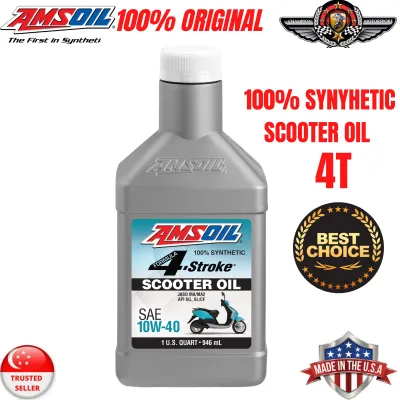
Prices are valid at publication and may change. Please refer to the product page for the latest price.

Scooters present unique thermal challenges compared to standard motorcycles. Because scooter engines are typically smaller, operate at higher revolutions per minute (RPM), and are enclosed within body panels, they generate substantial heat. Many scooters rely on air cooling or compact liquid-cooling systems, which can struggle to dissipate heat during prolonged idling in hot and humid climates like Singapore. This intense thermal environment accelerates oil oxidation and thermal breakdown, making a robust oil formulation critical.
Beyond viscosity, the Japanese Automotive Standards Organization (JASO) ratings are the most critical factor in scooter oil selection. Motorcycle oils are generally divided into JASO MA (which includes MA1 and MA2) and JASO MB standards. JASO MA oils are formulated with higher friction coefficients to prevent slippage in wet-clutch systems, where the engine and transmission share the same oil. Conversely, scooters feature dry-clutch systems and automatic CVT transmissions, meaning the engine oil only lubricates the engine crankcase.
Because scooter engines do not require wet-clutch friction, they utilize JASO MB oils, which are formulated with friction modifiers to minimize internal drag. Using a JASO MA oil in a scooter will not immediately destroy the engine, but it will increase internal friction, leading to sluggish acceleration and reduced fuel efficiency. Therefore, verifying the JASO MB rating on the bottle is a non-negotiable step for any scooter owner seeking optimal performance.
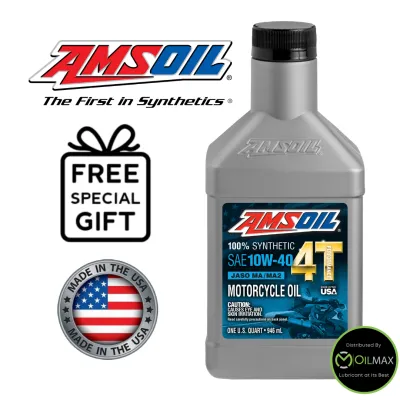
AMSOIL 10W-40: Premium Synthetic Protection
AMSOIL has established a reputation among automotive enthusiasts for producing top-tier, full-synthetic lubricants. The brand’s 10W-40 synthetic scooter oil is engineered specifically to withstand the extreme heat and shear forces common in modern high-performance scooters. By utilizing premium synthetic base stocks, AMSOIL minimizes oil consumption and maintains its viscosity even under prolonged high-temperature operations.
The primary benefit of AMSOIL’s formulation is its exceptional resistance to thermal breakdown. In stop-and-go urban traffic, engine temperatures can spike rapidly, causing lower-quality oils to oxidize and form harmful sludge or varnish. AMSOIL’s robust additive package active-cleans internal components, keeping piston rings free from carbon deposits and protecting critical bearings from premature wear. This level of protection is particularly advantageous for riders who frequently carry heavy loads, climb steep inclines, or ride at high speeds over long distances.
However, these premium performance characteristics come with specific trade-offs that buyers must consider. AMSOIL products generally sit in a premium price tier, making them a more substantial upfront investment compared to mainstream alternatives. Additionally, AMSOIL is not as widely distributed as major commercial brands; you are unlikely to find it on the shelf at every neighborhood workshop or petrol station. Sourcing this oil often requires visiting specialized motorcycle shops, dedicated synthetic lubricant distributors, or reputable online marketplaces.
Before purchasing AMSOIL 10W-40, always inspect the product label to verify its exact specifications. Ensure the product is explicitly rated for JASO MB applications and matches the API (American Petroleum Institute) service category recommended in your scooter’s manual. If you choose to invest in this premium synthetic oil, remember that its advanced protection is only fully realized when paired with a high-quality oil filter and proper installation.
Shell Advance 10W-40: Reliable Daily Commuting
Shell is a global giant in the petrochemical industry, and its Shell Advance 10W-40 scooter oil is a staple for commuters worldwide. The Shell Advance scooter range, including both semi-synthetic and full-synthetic options, is designed to deliver consistent, everyday reliability. Shell focuses heavily on engine cleanliness, utilizing proprietary cleansing technologies to prevent dirt particles from coalescing into performance-robbing deposits.
For the average daily commuter, Shell Advance 10W-40 offers highly dependable heat management and wear protection. If your typical ride consists of short to medium trips through suburban and city streets, this oil provides more than enough thermal stability to keep your engine running smoothly. It is formulated to resist the typical degradation associated with frequent start-stop cycles, making it an excellent choice for riders who adhere strictly to standard maintenance intervals.
One of Shell’s greatest advantages is its exceptional market accessibility and value proposition. Shell lubricants are available at a highly competitive mid-range price point, making regular oil changes affordable for budget-conscious riders. Furthermore, because of Shell’s extensive distribution network, you can easily purchase this oil at almost any local workshop, petrol station, or online retail platform in Singapore. This convenience simplifies the maintenance process, as you rarely have to search far to find a replacement bottle.
When buying Shell Advance 10W-40, you must exercise caution to ensure you purchase the correct formulation. Shell produces both “Advance 4T” for manual motorcycles (JASO MA) and “Advance 4T Scooter” (JASO MB). The labels can look remarkably similar at a glance, so always double-check the front and back of the bottle for the word “Scooter” and the explicit JASO MB certification before making your purchase.
Castrol Power1 10W-40: Balanced Friction Reduction
Castrol is another household name in automotive lubrication, widely recognized for its motorsport heritage and advanced fluid engineering. The Castrol Power1 10W-40 Scooter oil is specifically formulated to optimize power and acceleration. Castrol achieves this by incorporating specialized friction-modifying technology designed to reduce internal engine drag, allowing the engine to rev more freely and respond quickly to throttle inputs.
The emphasis on friction reduction makes Castrol Power1 an appealing option for riders seeking a more responsive and engaging riding experience. By minimizing the parasitic power losses that occur within the crankcase, this oil can contribute to smoother power delivery and marginal improvements in fuel economy. It provides a balanced performance profile, offering reliable wear protection and thermal stability while actively enhancing the engine’s efficiency during urban acceleration.
In terms of market positioning, Castrol Power1 occupies a highly competitive space, offering a step up in performance technology without the premium price tag of boutique synthetic brands. It represents an excellent middle ground for scooter owners who want more than basic protection but are hesitant to pay top-tier prices. Like Shell, Castrol enjoys widespread retail distribution, ensuring you can easily find it at independent workshops, automotive retail outlets, and major online stores.
To get the most out of Castrol Power1 10W-40, riders must confirm they are selecting the scooter-specific variant. Castrol’s product lineup is extensive, and the standard Power1 4T oil is designed for wet-clutch motorcycles. Always verify that the bottle clearly states “Power1 Scooter” and displays the JASO MB rating on the reverse label to ensure compatibility with your vehicle’s dry-clutch system.
Head-to-Head Comparison: AMSOIL vs Shell vs Castrol
This comparison highlights that there is no single “best” oil; rather, each product is optimized for different riding scenarios and owner priorities. AMSOIL is the clear winner for riders who demand the absolute highest level of protection under extreme operating conditions and are willing to pay a premium. Shell offers unmatched convenience and reliable everyday performance, making it the practical choice for standard commuters. Castrol provides an appealing blend of responsiveness and efficiency, serving as an excellent option for active city riders.
| Brand/Formulation | Best Suited For | Price Tier | Primary Strength | Availability |
|---|---|---|---|---|
| AMSOIL Synthetic Scooter 10W-40 | Aggressive riding, high-heat conditions, maximum protection | Premium | Thermal stability & oxidation resistance | Specialized retailers & online distributors |
| Shell Advance Scooter 10W-40 | Daily commuting, standard urban riding, budget-conscious owners | Mid-range | Engine cleanliness & deposit prevention | Extremely high (workshops, petrol stations) |
| Castrol Power1 Scooter 10W-40 | Stop-and-go city traffic, riders seeking responsive throttle | Mid-range | Friction reduction & smooth acceleration | High (workshops & online marketplaces) |
When choosing among these three options, you should also consider your local climate and traffic conditions. In Singapore, where high humidity and traffic congestion are constant, the thermal demands on your scooter engine are elevated. While all three brands offer viable 10W-40 formulations, your choice should ultimately reflect how much stress your typical daily route puts on your engine and how frequently you intend to perform oil changes.
How to Choose the Right Oil for Your Riding Style
Selecting the right motor oil involves matching the lubricant’s properties to your specific riding patterns. If your daily commute involves short trips with frequent idling at traffic lights, an oil with strong cleaning properties and friction modifiers, like Shell or Castrol, is highly effective. If you frequently ride long distances on expressways or carry heavy pillion passengers, the superior thermal resistance of a full synthetic like AMSOIL will provide better long-term protection against engine wear.
Regardless of which brand appeals to you, your first step must always be to consult your scooter’s owner manual. The manufacturer’s documentation outlines the mandatory viscosity grades, API service classifications, and JASO standards required to maintain your warranty and ensure engine safety. Never deviate from these original equipment manufacturer (OEM) recommendations without professional guidance, as using an incompatible oil can lead to severe engine damage.
Furthermore, it is vital to understand that high-quality oil does not justify neglecting your maintenance schedule. Scooter engines have small oil capacities—often less than one liter—meaning the oil is subjected to intense stress and contaminates quickly with combustion byproducts. Even if you use a premium full-synthetic oil like AMSOIL, you must still change your oil at the intervals recommended by your scooter’s manufacturer to prevent sludge buildup and ensure optimal engine health.
Finally, always purchase your scooter oil from authorized distributors, official brand stores, or highly reputable online merchants. The automotive fluid market is occasionally targeted by counterfeiters producing low-quality oils packaged in branded bottles. Using counterfeit oil can lead to catastrophic engine failure, so verifying the authenticity of your purchase is just as important as selecting the right brand.
Frequently Asked Questions (FAQ)
Can I use JASO MA motorcycle oil in my scooter?
While using JASO MA oil in a scooter will not cause immediate, catastrophic engine failure, it is highly discouraged. JASO MA oils are specifically formulated with high-friction properties to prevent clutch slippage in wet-clutch motorcycles, where the engine and gearbox share the same oil reservoir. Scooters utilize automatic CVT transmissions and dry clutches, meaning the engine oil only lubricates the engine components and does not touch the clutch.
Because scooters do not require high friction for clutch engagement, they benefit significantly from the friction modifiers found in JASO MB oils. Using a JASO MA oil in your scooter increases internal friction and drag within the engine. This unnecessary resistance leads to sluggish throttle response, reduced acceleration, and lower fuel efficiency. To maintain optimal performance, always insist on using a dedicated JASO MB scooter oil.
Does full synthetic oil allow for longer drain intervals in scooters?
Although full synthetic oils like AMSOIL offer superior resistance to thermal breakdown and oxidation compared to conventional or semi-synthetic oils, they do not automatically grant permission to extend your oil drain intervals. Scooter engines operate under extremely harsh conditions, running at high RPMs and high temperatures with very small oil capacities. This environment causes the oil to accumulate combustion byproducts, fuel dilution, and moisture relatively quickly.
Even if the oil’s chemical structure remains stable, these accumulated contaminants can still cause engine wear if left in the crankcase for too long. To protect your engine, you should always adhere to the mileage or time-based oil change intervals specified in your scooter’s owner manual. Premium synthetic oils should be viewed as providing a higher margin of safety and better wear protection during the recommended service interval, rather than a means to delay essential maintenance.
Community discussion
Share your experience or ask a question. Comments are reviewed before publication.