
Why PSI and CFM Matter for Inflating Tyres
To inflate vehicle tyres properly, you must match your equipment to the volume and pressure demands of your rubber. Selecting the wrong tool can lead to painfully slow inflation times, overheated equipment, or an inability to reach the required pressure. The two metrics that dictate this performance are PSI (Pounds per Square Inch) and CFM (Cubic Feet per Minute).
PSI measures the force of the air pressure delivered by the compressor. This rating determines whether the machine can overcome the existing pressure inside the tyre to force more air in. Most passenger vehicles require moderate pressure, but the compressor must still comfortably exceed that target to function efficiently.
CFM measures the volume of air the compressor moves every minute. While PSI determines if the compressor can fill the tyre, CFM determines how quickly that fill occurs. Standard passenger car tyres hold a relatively small volume of air, meaning a low-flow compressor can inflate them in a reasonable timeframe.
Products mentioned in this guide
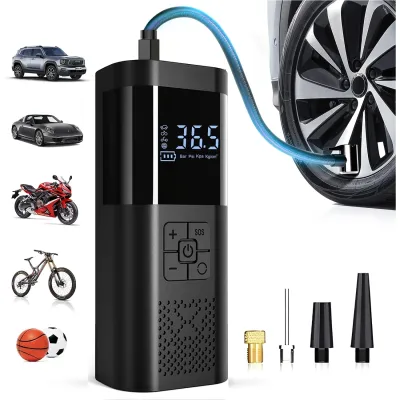


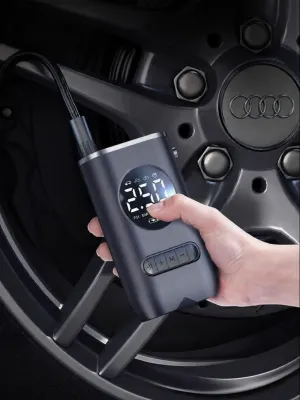
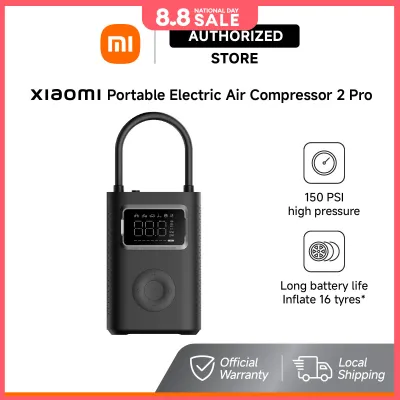
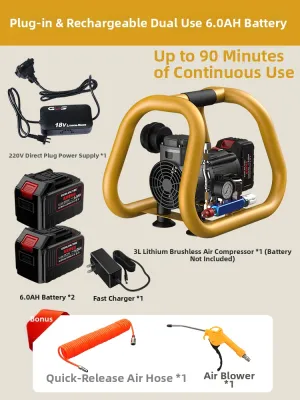
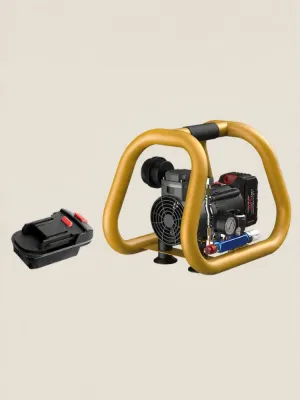
Prices are valid at publication and may change. Please refer to the product page for the latest price.
Conversely, large SUV, van, or 4×4 tyres contain a massive volume of air. Trying to fill a high-volume tyre with a low-CFM compressor results in prolonged run times that can strain the machine. Finding the right compressor is a matter of balancing sufficient pressure capability with an airflow rate that matches your vehicle’s tyre volume.
Decoding Key Compressor Specifications
Understanding compressor specifications requires cutting through marketing jargon to find the actual performance capabilities of the machine. Manufacturers often highlight peak metrics that do not reflect real-world operation.

Maximum PSI vs. Working PSI
Maximum PSI represents the absolute peak pressure a compressor pump can generate before shutting off. While a box might proudly display “150 PSI,” this peak figure is rarely sustainable or necessary for tyre inflation.
Working PSI, also known as continuous operating or delivery pressure, is the realistic pressure the compressor maintains while actively discharging air. Standard passenger cars typically require a cold tyre pressure of 30 to 35 PSI. Larger SUVs, commercial vans, and light trucks often require 35 to 50 PSI or more, depending on the load.
To inflate these tyres efficiently without overworking the motor, look for a compressor with a working PSI rating of 90 to 100. This headroom ensures the compressor does not have to work at its absolute limit to push air into a tyre that is already near its target pressure.
CFM and Inflation Speed
CFM is the true indicator of how fast a compressor will get you back on the road. Because air compresses under pressure, CFM is always rated at a specific pressure level, typically written as “CFM @ 90 PSI” or “CFM @ 40 PSI.”
If you use a compressor with a low flow rate, such as 0.5 to 1.0 CFM, filling a large SUV tyre from flat can take ten minutes or longer. This slow rate is not just inconvenient; it forces the compressor motor to run continuously, which generates extreme heat and can lead to premature failure.
For larger tyres or situations where you need to inflate multiple vehicle tyres in one go, a higher flow rate of 2.0 to 4.0+ CFM is highly recommended. This extra volume reduces inflation times to a fraction of what a budget utility pump requires.
Tank Capacity and Duty Cycle
Tank capacity and duty cycle determine how long a compressor can run before it needs to stop and cool down. Tankless compressors, such as compact 12V portable tyre inflators, have no storage reservoir and rely entirely on the motor running continuously to deliver air.
In contrast, tank-based compressors—like 1-to-6-gallon pancake or hotdog models—store pressurized air. When you pull the trigger, the tank releases stored air instantly at a high flow rate, allowing the motor to cycle on and off rather than running constantly.
Duty cycle is expressed as a percentage of a 10-minute period. A compressor with a 50% duty cycle can run continuously for 5 minutes but must then rest and cool down for 5 minutes. If you regularly inflate large tyres, look for a compressor with a high duty cycle (such as 100% at working pressures) or a larger storage tank to protect the motor from overheating.
Matching Compressor Specs to Your Vehicle Type
Different vehicle classes have distinct air volume and pressure requirements. Matching your vehicle type to the correct compressor specifications prevents equipment damage and saves time.
| Vehicle Type | Typical Tyre Pressure | Recommended CFM | Recommended Tank / Power Type | Best Use Case |
|---|---|---|---|---|
| Sedans & Hatchbacks | 30 – 35 PSI | 0.5 – 1.5 CFM | Tankless 12V portable or 1-gallon tank | Emergency top-ups, routine monthly maintenance |
| SUVs & Crossovers | 35 – 45 PSI | 1.5 – 2.5 CFM | Heavy-duty 12V portable or 3–6 gallon tank | Family road trips, handling larger tyre volumes safely |
| 4x4s & Light Trucks | 35 – 50+ PSI | 3.0 – 5.0+ CFM | Twin-cylinder 12V portable or 6+ gallon tank | Off-road use, rapid re-inflation after airing down |
For smaller passenger cars, a compact, tankless 12V inflator that plugs into your vehicle’s accessory socket is highly practical. These units are easy to store in the boot and provide more than enough power for routine maintenance and emergency top-ups.
Medium-sized vehicles like crossovers and family SUVs benefit from a more robust setup. A heavy-duty 12V unit that connects directly to the vehicle battery terminals, or a small 3-to-6-gallon garage compressor, provides the volume needed to handle larger tyres without stalling.
For off-road vehicles and light trucks, high-output twin-cylinder portable compressors or large garage units are essential. These vehicles often require tyres to be deflated for traction on soft terrain and then fully re-inflated, a task that demands maximum CFM and high duty cycles.
Specs You Can Safely Deprioritise
When shopping for a compressor, certain specifications are heavily marketed but offer very little practical value for tyre inflation.
- Horsepower (HP): Consumer compressor horsepower ratings are frequently inflated "peak" or "max" numbers that do not reflect continuous running power. Focus on CFM and working PSI instead.
- Excessive Maximum PSI: A compressor boasting 150 or 200 PSI is unnecessary if your tyres only require 35 PSI. High pressure cannot compensate for a low CFM rating; a high-PSI, low-CFM unit will still inflate large tyres incredibly slowly.
- Tank Size on Portable Units: For portable 12V inflators, a tiny integrated air tank adds bulk and weight without providing enough volume to make a difference. For portability, prioritize motor cooling and build quality over a small air reservoir.
Safety and Operational Boundaries
Before inflating any tyre, always check the vehicle manufacturer’s recommended cold tyre pressure. This information is located on the tyre placard inside the driver’s door jamb or in the owner’s manual. Do not use the maximum pressure listed on the tyre sidewall, as this represents the absolute limit the tyre can physically hold, not the correct pressure for safe vehicle handling.
Always use a high-quality, standalone digital or dial tyre pressure gauge to verify your readings. The built-in pressure gauges on budget compressors, especially inline hose gauges, can be highly inaccurate due to vibration and pressure fluctuations during operation.
Keep a close eye on the compressor’s duty cycle. In warm climates, like Singapore’s consistently high ambient temperatures, air compressors heat up much faster. Running a compressor beyond its rated duty cycle can melt internal seals or burn out the motor.
If you notice uneven tyre wear, persistent pressure loss, or visible cracks and bulges in the rubber, do not attempt to solve the issue with simple inflation. Stop using the vehicle and consult a qualified tyre professional to inspect the structural integrity of the tyre.
Frequently Asked Questions (FAQ)
Can I use a standard 12V portable inflator for large SUV tyres?
Yes, a standard 12V portable inflator can eventually reach the required pressure for an SUV tyre, but it is not ideal. Because of its low CFM rating, the inflator will have to run continuously for a long time to fill the large volume of air. This extended run time can easily exceed the unit’s duty cycle, causing it to overheat, blow fuses, or suffer permanent motor damage. For regular SUV use, invest in a heavy-duty 12V inflator designed for larger vehicles.
Do I need an automatic shut-off feature for tyre inflation?
An automatic shut-off feature is highly convenient and helps prevent accidental over-inflation, making it a great option for beginners. However, you should not rely on it blindly. The pressure sensors in budget compressors can drift or lose calibration over time. Always double-check the final tyre pressure with a reliable, standalone digital or dial gauge before driving.
Community discussion
Share your experience or ask a question. Comments are reviewed before publication.