
Choosing the right rims protector for your vehicle is a practical decision that can save you from costly wheel repairs. In urban driving environments like Singapore, where tight multi-storey car park ramps, narrow parallel parking lots, and high concrete curbs are common, wheel scrape is a frequent headache for drivers. The two primary solutions available on the market are adhesive strips and full-cover rings. Each design offers a distinct approach to shielding your alloy wheels from curb rash, and the right choice depends on your budget, aesthetic preferences, and willingness to undergo professional installation.
There is no single superior option for every driver. Adhesive strips provide a lightweight, highly customizable, and budget-friendly barrier that you can install yourself in your own driveway or parking space. On the other hand, full-cover rings offer a more robust, mechanically secured physical shield that sits deep within the wheel assembly, though they require professional equipment to mount. By understanding how these two systems function, how they interact with your tires, and what safety boundaries you must respect, you can select the product that best matches your driving habits and vehicle specifications.
Understanding the Core Differences in Rim Protector Designs
To make an informed choice, you must first understand how these two types of rim protectors are constructed and how they attach to your wheel assembly. Adhesive strips are typically made of flexible, semi-rigid plastics, rubber, or silicone compounds. They are supplied in rolls or pre-cut lengths and feature a high-strength, automotive-grade double-sided adhesive tape on the backing. You apply these strips directly to the outer lip of the wheel rim or, in some designs, along the outer edge of the tire sidewall. Because they rely entirely on chemical adhesion, their installation is non-invasive and does not alter the physical relationship between the tire and the wheel.
Products mentioned in this guide
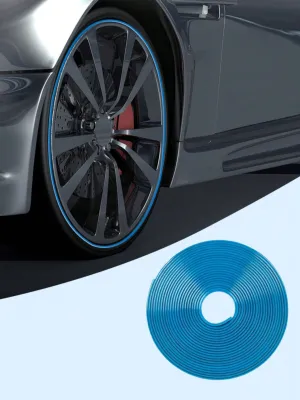
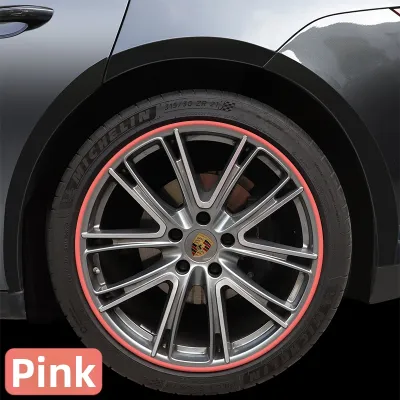
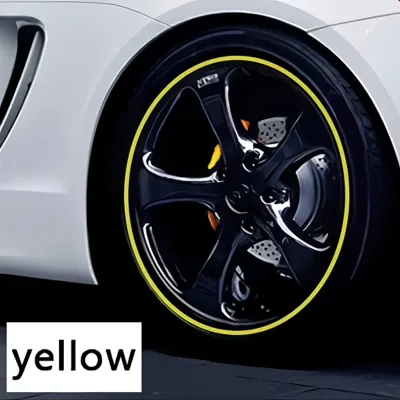
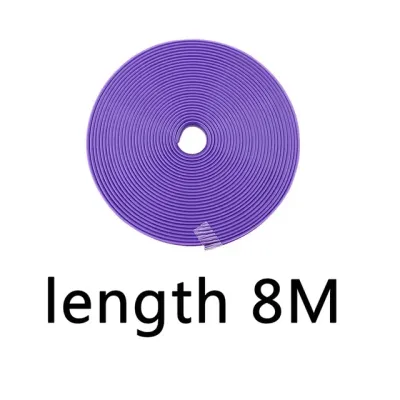
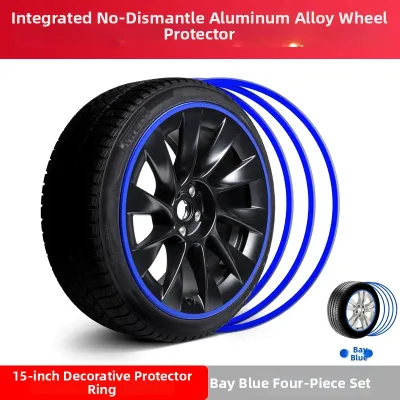
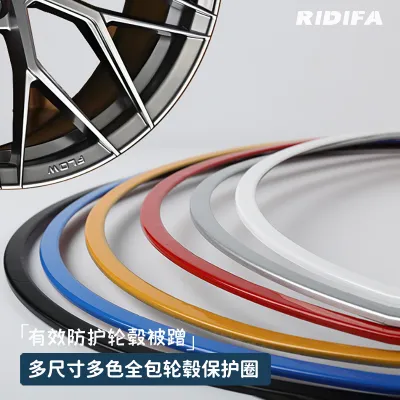
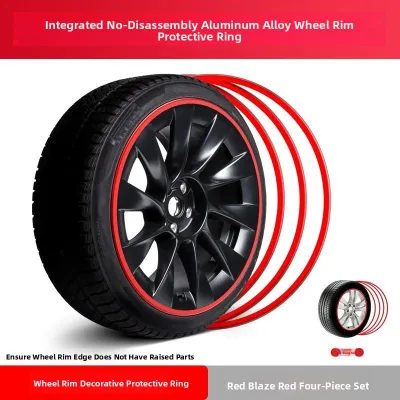
Prices are valid at publication and may change. Please refer to the product page for the latest price.
In contrast, full-cover rings are structural components molded from tough, impact-resistant polymers or heavy-duty nylon. Instead of relying on glue, these rings feature a specially designed mounting tab or tail that inserts directly into the gap between the tire bead and the wheel rim. Installing them requires deflating the tire, breaking the bead seal, inserting the ring’s mounting flange, and then reinflating the tire to lock the protector in place using the tire’s internal air pressure. This mechanical locking mechanism ensures that the protector remains firmly anchored even under significant physical stress, but it also means the installation process is inherently linked to the tire’s structural mounting.
The visual and physical coverage of these two designs also differs significantly. Adhesive strips act as a surface-level barrier, covering only the outermost face of the rim lip. They are designed to absorb light, glancing scrapes and prevent the paint or clear coat from being scratched. Full-cover rings, however, act as a structural shield. They extend further outward from the wheel face, creating a physical buffer zone that absorbs the brunt of heavier impacts. When a full-cover ring contacts a curb, the impact force is distributed across the tough polymer structure rather than being transferred directly to the delicate alloy edge of your wheel.
Key Comparison Dimensions for Wheel Protection
When evaluating these two options, several key dimensions must be weighed, starting with installation complexity and tool requirements. Adhesive strips are highly DIY-friendly. The process requires no specialized automotive tools—only basic cleaning supplies, scissors or a utility knife, and a steady hand. This makes them an attractive option for car owners who enjoy working on their vehicles and want to avoid the labor costs associated with professional garage visits. Conversely, full-cover rings demand professional tire mounting equipment. Attempting to break a tire bead and insert a structural ring at home without a professional tire changer can damage the tire sidewall, scratch the wheel, or lead to improper seating, which poses a severe safety risk.

The level of physical protection is another critical differentiator. Adhesive strips are highly effective at preventing minor cosmetic damage, such as light scuffs from car wash tracks or gentle brushes against low curbs during slow-speed parking maneuvers. However, because they are thin and held in place only by adhesive, a hard impact or a deep scrape can easily tear the strip away, exposing the metal underneath. Full-cover rings offer much higher impact resistance. Their thick, semi-rigid polymer construction can withstand more aggressive curb contact, shielding the wheel from deep gouges and structural deformation during moderate-speed parking mishaps.
You must also consider the potential impact on tire dynamic balancing and Tire Pressure Monitoring Systems (TPMS). Any accessory added to a rotating wheel assembly alters its weight distribution. Because adhesive strips are lightweight and applied evenly around the circumference, their impact on wheel balance is usually negligible, though you should still monitor for high-speed steering wheel vibrations. Full-cover rings are heavier and require precise, uniform seating. If a ring is slightly misaligned or if its weight is unevenly distributed, it can cause significant wheel imbalance. Furthermore, during the installation of full-cover rings, the tire bead must be disturbed, which carries a risk of damaging internal, valve-stem-mounted TPMS sensors if the technician is not careful.
Finally, durability and replacement conditions vary between the two types. Adhesive strips are susceptible to environmental degradation. High ambient temperatures, intense sunlight, road salt, and frequent exposure to water or harsh wheel cleaners can weaken the adhesive bond over time, causing the edges to lift or peel. Once an adhesive strip begins to peel, it must be replaced immediately to prevent it from flapping or detaching at high speeds. Full-cover rings are highly durable and resistant to weather elements, but they are not indestructible. If a ring sustains a heavy impact, it may crack, deform, or become partially unseated. A damaged ring must be inspected and replaced promptly, as a loose polymer ring rotating at high speeds can damage your vehicle’s bodywork or create a road hazard.
Matching Protector Types to Vehicle and Driving Scenarios
Selecting the right rims protector requires analyzing your specific vehicle type, wheel configuration, and daily driving routes. Adhesive strips are highly suited for standard commuter vehicles, family sedans, and compact cars that primarily navigate well-maintained roads with low curb risks. If you rarely parallel park in tight urban spots or if your daily commute consists mostly of highway driving, the light cosmetic protection of adhesive strips is often more than adequate. They are also an excellent choice for drivers who change their vehicle’s look frequently, as they are easy to remove and come in a wide variety of colors to accent the wheels.
Full-cover rings are better suited for vehicles with large alloy wheels and low-profile performance tires. Low-profile tires have very thin sidewalls, leaving the wheel rims highly exposed to curb damage even during minor parking misjudgments. If you drive a performance sedan, a sporty hatchback, or an SUV with oversized wheels, full-cover rings provide the heavy-duty physical barrier needed to protect your investment. They are also highly recommended for drivers who frequently navigate narrow urban streets, tight multi-storey car parks with spiral ramps, or areas where parallel parking against high concrete curbs is unavoidable.
However, there are several scenarios where neither protector type may be suitable, or where you must exercise extreme caution. Forged wheels with highly specialized, ultra-thin outer lips may not have enough flat surface area to support the adhesive backing of a strip, nor the necessary bead clearance to accommodate a full-cover ring. Electric vehicles (EVs) equipped with aerodynamic wheel covers or complex, multi-material wheel inserts may also face compatibility issues, as the protectors can interfere with the fitment of the aero covers. Additionally, tires with built-in rim protector ribs—raised rubber ridges molded into the tire sidewall—may prevent adhesive strips from bonding correctly or make it difficult to seat a full-cover ring securely. Always verify your wheel and tire specifications before purchasing.
Step-by-Step Decision Framework
To finalize your decision, you can use a structured framework based on your budget, installation preferences, and protection requirements.
You should choose adhesive strips if you meet the following criteria:
- You are working with a limited budget and want a cost-effective solution.
- You prefer a straightforward DIY project that you can complete in under an hour without professional assistance.
- Your primary goal is to prevent minor cosmetic scuffs, car wash scratches, and light road debris damage.
- You want the flexibility to easily remove or change the color of the protectors without visiting a workshop.
You should choose full-cover rings if you meet these criteria:
- You are willing to invest a higher initial amount for both the product and professional installation services (which typically range from S$40 to S$100 depending on the workshop).
- Your vehicle is equipped with expensive, large alloy wheels and low-profile tires that are highly vulnerable to damage.
- You frequently drive in high-risk environments, such as tight urban areas, narrow ramps, and concrete-curbed parking lots.
- You require a robust, mechanically secured physical barrier that can withstand direct, moderate-impact curb scrapes.
Before making any purchase, you must perform several critical verification steps. First, inspect your wheels for any existing damage, specialized ceramic coatings, or paint finishes that might prevent adhesive bonding. Second, check if your vehicle uses direct TPMS sensors, as this will require extra care during any tire bead manipulation. Finally, consult your tire and wheel manufacturer guidelines to ensure that adding an aftermarket protector will not void your warranties or compromise the structural integrity of your tire bead seat.
Installation and Maintenance Safety Boundaries
Adhering to strict safety boundaries during installation and maintenance is essential to protect your vehicle and ensure road safety. For adhesive strips, the key to a successful and safe application is meticulous surface preparation. The wheel rim must be completely free of brake dust, road grime, grease, wax, and tire shine products. Clean the surface thoroughly with isopropyl alcohol or a dedicated wax and grease remover, and ensure it is completely dry before application. You must also verify the adhesive’s compatibility with your specific wheel coating; some matte finishes or ceramic coatings may prevent proper adhesion, leading to premature failure. Never apply adhesive strips in cold or highly humid conditions, as this will severely compromise the bond strength.
For full-cover rings, the safety boundaries are even more critical because they involve the tire bead assembly. Tire mounting and demounting must always be performed by a qualified professional at a reputable tire shop. Attempting to install these rings yourself without professional tire changers and bead-breaking equipment can lead to catastrophic tire failure, damaged bead wires, or ruined TPMS sensors. The technician must ensure that the tire bead seats perfectly over the ring’s mounting flange and that the tire inflates to the manufacturer’s recommended pressure without any air leaks.
Ongoing maintenance is vital for both systems. You should make it a habit to inspect your rim protectors during your regular vehicle wash or tire pressure checks. For adhesive strips, look for any signs of lifting, peeling, or cracking, especially at the joint where the two ends meet. If any section is loose, remove the entire strip immediately to prevent it from detaching while driving. For full-cover rings, check for any displacement, warping, or cracking after a known curb impact. If a ring appears loose or is protruding from the wheel lip, visit a tire professional immediately to have it inspected, reseated, or replaced. Operating a vehicle with a damaged or loose rim protector poses a serious safety hazard to you and other road users.
Frequently Asked Questions (FAQ)
Do rim protectors affect wheel balancing? (FAQ)
Yes, rim protectors can potentially affect your wheel’s dynamic balancing, though the impact varies by type. Because full-cover rings add a structured, heavier polymer layer directly to the wheel circumference, they alter the weight distribution of the rotating assembly. It is highly recommended to have your wheels dynamically rebalanced on a balancing machine immediately after installing full-cover rings. Adhesive strips are much lighter and generally have a negligible impact on balance. However, if you notice any steering wheel vibrations or unusual ride harshness at highway speeds after installing either type, you should visit a professional tire shop to verify the wheel balance and ensure safe driving conditions.
Can I reuse a rim protector after changing tires? (FAQ)
Adhesive strips are strictly single-use products. Once they are peeled off the wheel during a tire change or replacement, the adhesive backing is destroyed, and the material itself is often stretched or deformed. You must thoroughly clean any remaining adhesive residue from the wheel lip before applying a new set. Full-cover rings, however, may be reusable under specific conditions. If the rings are carefully removed by a professional technician without damaging the interlocking mounting tabs or the main body, and if your new tires are the exact same size and specification as the old ones, they can often be reinstalled. Always inspect the rings thoroughly for structural cracks or wear before deciding to reuse them.
Community discussion
Share your experience or ask a question. Comments are reviewed before publication.