
Evaluating whether the A810S TPMS is the right choice for your vehicle requires looking beyond basic marketing claims. Because tire pressure monitoring systems vary significantly in sensor placement, display integration, and alert logic, the best option depends on your specific installation capabilities and driving habits. In Singapore’s demanding driving environment—characterized by stop-and-go urban traffic, high ambient temperatures, and sudden tropical downpours—having a reliable TPMS is crucial for maintaining tire health, optimizing fuel efficiency, and ensuring road safety. Rather than assuming one system is universally superior, drivers must compare how different models handle sensor communication, alert customization, and environmental exposure. This guide provides a structured framework to evaluate the A810S TPMS against competing options, focusing on verifiable specifications and practical installation requirements.
Core Decision Factors for Evaluating the A810S TPMS
To make an informed decision, you must first understand the primary technical specifications that differentiate the A810S from other aftermarket tire pressure monitoring systems. The most fundamental choice is between external valve-cap sensors and internal valve-stem sensors. External sensors screw directly onto your existing tire valves, making them highly accessible for DIY installation and battery replacements. Internal sensors, conversely, are mounted inside the tire rim, protecting them from environmental hazards and theft, but they require professional installation.
Beyond physical placement, you must evaluate how the system processes and displays data. Some systems utilize a dedicated dashboard display powered by solar energy or a USB connection, while others integrate directly with your vehicle’s OBD2 port or connect to a smartphone application via Bluetooth. Each approach has distinct trade-offs regarding dashboard clutter, power consumption, and ease of viewing while driving.
Products mentioned in this guide
![[NEW] 70mai A810S Dash Cam 4K Resolution + HDR | 4G Connectivity | Built-in GPS & ADAS | Dual SONY HDR | Supercapacitor](https://img.lazcdn.com/g/p/12b3e825bd363ef619248cedda0ec9fd.jpg_400x400q80.jpg_.webp)
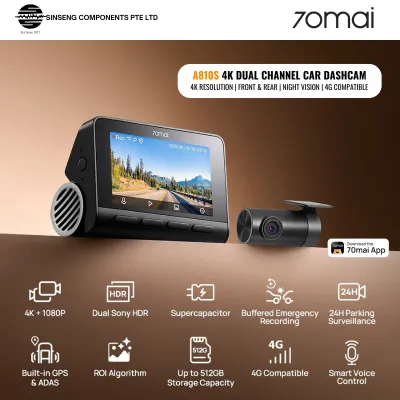
Prices are valid at publication and may change. Please refer to the product page for the latest price.
Finally, look closely at the alert thresholds and build quality indicators. A high-quality TPMS should allow you to customize high- and low-pressure warning limits to match your vehicle’s specific manufacturer recommendations. For durability, especially in wet and humid climates, check the Ingress Protection (IP) rating of the sensors and verify whether the batteries can be replaced easily when they eventually run out of power.
Comparing Sensor Accuracy and Alert Systems
When comparing the A810S to alternative TPMS models, sensor accuracy and response times are critical performance metrics. You can verify these capabilities by examining the manufacturer’s technical specification sheets rather than relying on vague product descriptions. Look for the stated pressure deviation tolerance, which is typically represented as a plus-or-minus value (such as ±1.5 PSI or ±0.1 bar). A narrower tolerance indicates a more precise sensor that can detect minor pressure drops before they affect handling or fuel economy.

Equally important is the sensor’s transmission frequency and response time. High-quality sensors monitor pressure continuously and transmit updates to the display unit at regular intervals—usually every few seconds when the vehicle is in motion, and less frequently when parked to conserve battery life. Ensure the system you choose features rapid-alert technology that immediately transmits data if a sudden, rapid pressure loss is detected, rather than waiting for the next scheduled transmission interval.
Alert customization is another area where systems differ significantly. Basic TPMS models often feature fixed, non-adjustable alert thresholds that trigger a warning only when pressure drops below a pre-set factory limit. This can lead to false alarms or delayed warnings if your vehicle’s recommended cold tire pressure is significantly higher or lower than the factory default. Look for systems that allow you to program custom high-pressure, low-pressure, and high-temperature warning limits for both the front and rear axles independently. Additionally, verify that the system has built-in signal interference resistance, often achieved through robust wireless encoding protocols, to prevent cross-talk from nearby vehicles equipped with similar wireless sensors.
Display Types and Installation Requirements
The physical setup of your TPMS display directly impacts your daily driving experience. Standalone dashboard displays are highly popular because they offer an at-a-glance view of all four tires simultaneously without requiring you to interact with your phone or infotainment system. Many of these displays feature integrated solar panels on top, allowing them to run continuously on solar energy during daytime driving, with a micro-USB or USB-C port serving as a backup power source for night driving or parking in covered multi-storey car parks.
If you prefer a cleaner dashboard, look for alternative systems that connect to your smartphone via Bluetooth or integrate with an aftermarket Android head unit. While these app-based systems eliminate physical clutter, they require you to keep the app running in the background or manually open it to check your pressures, which may not be ideal for receiving instant, real-time alerts during an emergency.
Installation complexity is the primary practical differentiator between TPMS types. External valve-cap sensors can be installed in minutes by simply screwing them onto your existing valve stems and tightening the included lock nuts. However, if you choose an internal sensor system, you must account for professional installation.
Safety Warning: Installing internal TPMS sensors requires deflating the tire, breaking the bead, and removing the tire from the wheel rim to replace the standard valve stem. Because this process directly affects the structural integrity and sealing of your tires, it must be performed by a qualified technician at a professional tire workshop. Expect to pay local service fees, typically ranging from S$30 to S$80 depending on the workshop, which should include professional wheel balancing to offset the weight of the new internal sensors.
Build Quality, Maintenance, and Battery Life
Long-term durability is a major consideration for any automotive accessory exposed to the elements. In Singapore’s tropical climate, external sensors are subjected to intense solar heat, high humidity, and heavy downpours that can cause rapid wear. To ensure your sensors can withstand these conditions, verify their Ingress Protection (IP) rating in the product manual. An IP67 rating indicates complete protection against dust and resistance to water immersion up to one meter, which is generally sufficient for driving through heavy rain and shallow puddles.
Battery maintenance is another key differentiator. External sensors typically use standard, user-replaceable coin cell batteries (such as CR1632). These batteries generally last between one and two years, and replacing them is a simple DIY task that does not require removing the tire. Internal sensors, however, utilize specialized, high-temperature lithium batteries sealed inside the sensor housing to protect them from the harsh environment inside the tire. While these internal batteries often boast a longer lifespan of three to five years, they cannot be replaced individually. Once the battery dies, the entire internal sensor unit must be replaced, requiring another trip to a professional tire shop for demounting and rebalancing.
Before purchasing, check the manufacturer’s warranty terms and verify the availability of individual replacement sensors. If an external sensor is damaged by curb rash or lost during servicing, being able to purchase a single replacement sensor that can be paired with your existing display is far more cost-effective than being forced to buy an entirely new multi-sensor kit.
How to Decide: Is the A810S Right for Your Vehicle?
To determine if the A810S or an alternative TPMS is the best fit for your vehicle, apply a conditional decision framework based on your installation preferences, budget, and vehicle setup.
Choose the A810S or a similar external sensor system if you want a highly cost-effective, DIY-friendly solution that you can install yourself without visiting a workshop. This setup is ideal for drivers who prefer a dedicated, solar-powered dashboard display that operates independently of their smartphone and who do not mind the aesthetic appearance of small valve-cap sensors on their wheels.
Consider alternative internal TPMS models if you prioritize a clean, OEM-style wheel appearance and want maximum protection against theft and environmental wear. This option is best if you are already planning to replace your tires soon—allowing you to combine the sensor installation and wheel balancing into a single workshop visit—and are willing to pay the additional professional installation fees.
Before making any purchase, perform three essential compatibility checks. First, inspect your vehicle’s valve stems; some external sensors are not compatible with flexible rubber valve stems and require rigid metal stems to prevent damage from centrifugal forces at high speeds. Second, check your wheel rim clearance to ensure external sensors will not protrude past the tire sidewall, where they could easily strike curbs. Finally, verify that the display unit’s mounting options match your dashboard layout without obstructing your forward line of sight.
Frequently Asked Questions (FAQ)
Do I need to rebalance my tires after installing internal TPMS sensors?
Yes, you must have your wheels professionally rebalanced after installing internal TPMS sensors. Internal sensors typically weigh between 20 and 40 grams, which is more than enough to cause significant wheel imbalance. This imbalance can lead to steering wheel vibrations at highway speeds, uneven tire wear, and increased strain on your vehicle’s suspension components. Even when installing external valve-cap sensors, which are much lighter (usually around 5 to 10 grams), it is highly recommended to monitor your vehicle’s handling and consult a professional tire shop if you notice any unusual vibrations.
Can external TPMS sensors be stolen or damaged easily?
External valve-cap sensors are visible on the exterior of your wheels, making them more vulnerable to theft and physical damage than internal sensors. Most manufacturers include anti-theft lock nuts and a specialized wrench in the kit to secure the sensors to the valve stems, preventing casual theft. However, these lock nuts can make manual tire pressure adjustments and air top-ups slightly more time-consuming. Additionally, external sensors are exposed to physical impacts from curb rash during parking and can occasionally be damaged by the heavy high-pressure spray or mechanical brushes used in automated car washes.
Will a TPMS drain my car battery if left plugged in?
A modern TPMS display is highly unlikely to drain your vehicle’s 12V starter battery. Most standalone displays rely primarily on their built-in solar panels and internal rechargeable batteries, drawing power from your car’s USB port or cigarette lighter socket only when necessary. Furthermore, high-quality TPMS displays feature integrated vibration sensors (G-sensors) that automatically put the unit into a low-power sleep mode a few minutes after the vehicle stops moving. If you choose a hardwired system, ensure it is connected to an accessory (ACC) power source that shuts off when the ignition is turned off, rather than a constant-power circuit, to completely eliminate any risk of parasitic battery drain.
Community discussion
Share your experience or ask a question. Comments are reviewed before publication.