
In Singapore, determining whether a 70mai dash cam is compliant with the Land Transport Authority (LTA) depends primarily on how the device is installed and operated rather than a specific brand-wide ban or approval list. The LTA does not maintain an exclusive registry of approved dash cam brands; instead, compliance is governed by strict regulations regarding driver visibility, vehicle electrical safety, and wireless transmission standards. To ensure your 70mai dash cam is fully road-legal, you must verify its mounting position, power connection method, and wireless certification status against local regulatory frameworks.
Understanding LTA Dash Cam Regulations in Singapore
The Land Transport Authority (LTA) establishes clear guidelines for any aftermarket accessories installed on vehicles to ensure they do not compromise road safety. The primary concern with dash cams is driver visibility. According to local regulations, any device mounted on the front windshield must not obstruct the driver’s direct line of sight or interfere with the safe operation of the vehicle. This means the camera body, mounting bracket, and associated wiring must be positioned carefully to avoid blocking the driver’s view of the road, traffic signals, or pedestrians.
In practice, vehicle inspectors at authorized inspection centers look closely at where electronic accessories are attached. If a dash cam is mounted directly in the driver’s primary field of vision—typically defined as the area swept by the windshield wipers directly in front of the steering wheel—the vehicle may fail its periodic inspection. To prevent this, the device should be positioned high up on the windshield, ideally behind or adjacent to the rearview mirror, where it remains outside the driver’s immediate line of sight while still capturing a comprehensive view of the road.
Products mentioned in this guide
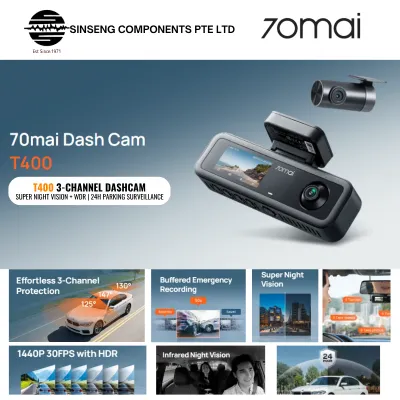
![[2026 NEW] 70mai A810 Lite Dashcam 4K Resolution + HDR | 4G Connectivity | Supercapacitor | Built-in GPS | Dual Recording](https://img.lazcdn.com/g/p/dde058960afcc39bbcd48d9d52298a3d.png_400x400q80.png_.webp)
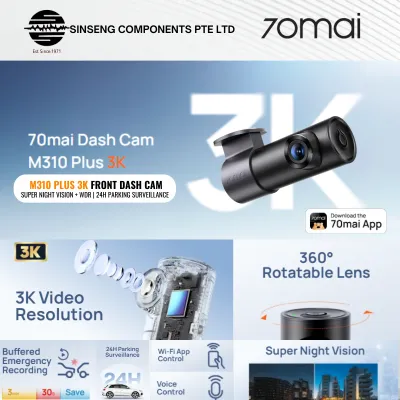
![[NEW] 70mai A810S Dash Cam 4K Resolution + HDR | 4G Connectivity | Built-in GPS & ADAS | Dual SONY HDR | Supercapacitor](https://img.lazcdn.com/g/p/12b3e825bd363ef619248cedda0ec9fd.jpg_400x400q80.jpg_.webp)
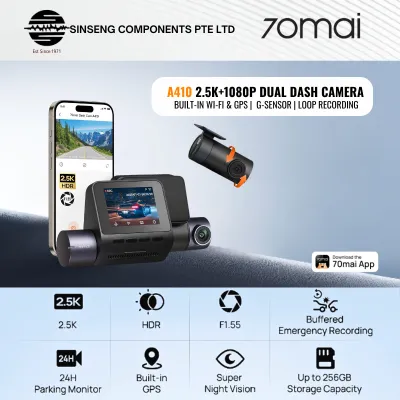
![[New Launch] 70mai A510 Dash Cam Dual Lens Front & Rear Car Camera Recorder with GPS ADAS | Dual Channel Dashcam Car Camera by Xiaomi](https://img.lazcdn.com/g/p/f968af9c50b35d65831a04f117b6c59a.png_400x400q80.png_.webp)

Prices are valid at publication and may change. Please refer to the product page for the latest price.
Beyond physical placement, drivers must also navigate local privacy laws when operating recording devices. The Personal Data Protection Act (PDPA) in Singapore regulates the collection, use, and disclosure of personal data, which includes video and audio recordings of individuals. While capturing footage on public roads for personal safety or insurance purposes is generally permissible, recording audio or video inside the cabin requires careful consideration, especially for private hire vehicle (PHV) drivers or taxi operators. If you use your vehicle for commercial passenger transport, you must display clear notices informing passengers that an in-cabin recording device is active.
Failing to adhere to these regulations carries significant risks. An improperly mounted dash cam that obstructs the driver’s view can lead to fines or a requirement to remove the device before the vehicle can pass its mandatory inspection. Furthermore, in the event of a traffic accident, an insurer may scrutinize the placement of your dash cam; if they determine that the device obstructed your view or contributed to driver distraction, it could complicate your insurance claim or affect the determination of liability.
How to Verify LTA Compliance for 70mai Models
Because many 70mai dash cams feature wireless connectivity—such as Wi-Fi or Bluetooth to sync footage with a smartphone app—they must comply with local telecommunications standards. In Singapore, the Info-communications Media Development Authority (IMDA) regulates all radiofrequency and wireless equipment sold and used locally. Before purchasing a specific 70mai model, you should verify whether the device has been registered with the IMDA, which ensures that its wireless emissions operate within safe, non-interfering frequency bands.

To verify this compliance, start by inspecting the product packaging or the user manual for the official IMDA compliance label or registration number. Authorized local distributors in Singapore typically import models that have already undergone this registration process and will display the compliance mark clearly on the box. If you are purchasing a model online, look for explicit mentions of IMDA approval in the product specifications or ask the seller directly to provide the registration details.
You can also cross-reference the specific model number on the IMDA’s online equipment registration database. This step is particularly important if you are considering parallel-imported models, which are sourced from other regions and may not have been configured or certified for the Singapore market. Devices that lack proper IMDA registration may operate on unauthorized wireless frequencies, potentially interfering with local telecommunications networks and violating local wireless regulations.
For absolute certainty, contact the official 70mai support team or their designated local distributors in Singapore before making a purchase. They can provide up-to-date information on which specific models have received local certifications and are fully authorized for sale and use. Consulting these official channels helps you avoid purchasing non-compliant hardware that could face customs issues or lack local technical support.
Evaluating 70mai Dash Cam Features for Local Driving Conditions
Singapore’s tropical climate, characterized by high temperatures and intense sunlight throughout the year, demands careful consideration when choosing vehicle electronics. Dash cams mounted on the windshield are subjected to extreme heat, especially when the vehicle is parked in open-air carparks or on the roadside under direct sunlight. This thermal stress can severely impact the performance, longevity, and safety of the device’s internal components.
One of the most critical hardware specifications to evaluate is the power storage technology used in the dash cam. Traditional lithium-ion batteries are highly sensitive to extreme heat; prolonged exposure to high temperatures can cause them to swell, degrade rapidly, or even pose a risk of thermal runaway. In contrast, supercapacitors are significantly more heat-resistant and durable, making them a reliable choice for tropical climates like Singapore’s. When comparing 70mai models, prioritize those equipped with supercapacitors, as they offer greater reliability and safety under intense heat.
Parking surveillance is another feature highly valued by local drivers, particularly in busy multi-story or public carparks. However, running a dash cam continuously while the engine is off requires a robust power management system. You must ensure that the model you select supports a reliable parking mode that minimizes power consumption and integrates seamlessly with a hardwire kit. This setup allows the camera to enter a low-power standby state, recording only when motion or an impact is detected, thereby protecting your vehicle without excessively draining the battery.
Additionally, Singapore’s weather conditions often include sudden, heavy monsoon downpours that drastically reduce road visibility. To ensure your dash cam can capture legible license plates and critical road details during these storms or on poorly lit roads at night, evaluate the camera’s optical specifications. Look for models featuring high-resolution sensors, a wide dynamic range (WDR) or high dynamic range (HDR) to balance extreme light and shadow, and a wide-angle lens that covers multiple lanes without creating excessive fish-eye distortion.
Safe Installation and Wiring Practices
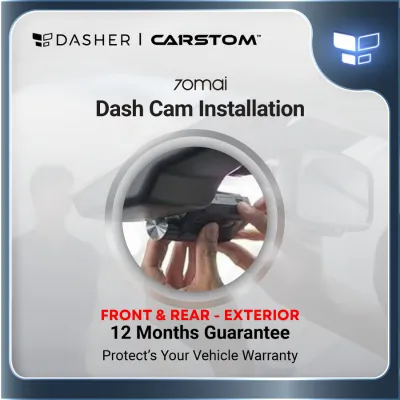
Proper installation is just as important as choosing the right dash cam model to ensure compliance with both LTA regulations and vehicle safety standards. The ideal mounting zone for a front-facing camera is high up on the windshield, directly behind the rearview mirror on the passenger side. This placement ensures the camera has a clear, centered view of the road while remaining completely hidden from the driver’s direct line of sight, satisfying LTA’s visibility requirements.
When it comes to powering the device, you generally have two options: utilizing the vehicle’s auxiliary power outlet (cigarette lighter) or hardwiring the camera directly to the fuse box. While the auxiliary outlet method is straightforward and easy to do yourself, it leaves visible cables hanging across the dashboard and occupies a valuable power port. Hardwiring provides a much cleaner, hidden installation and is necessary if you want to utilize the dash cam’s 24-hour parking surveillance features.
However, hardwiring a dash cam involves connecting wires directly to your vehicle’s electrical system, which carries inherent risks if done incorrectly. Modern vehicles are equipped with highly sensitive electronic control units and complex wiring harnesses. An incorrect connection in the fuse box can lead to short circuits, blown fuses, or even void your vehicle’s manufacturer warranty. For this reason, it is strongly recommended to have the hardwire kit installed by a qualified automotive technician or a professional car accessories workshop.
During installation, extreme care must be taken regarding safety systems such as airbags and advanced driver-assistance systems (ADAS). If cables are routed along the A-pillars, they must be positioned behind the side-curtain airbags to ensure they do not interfere with airbag deployment during an accident. Furthermore, the camera body and its wiring must not block or interfere with the sensors and cameras mounted near the top of the windshield that control features like lane-keeping assist or automatic emergency braking.
Purchasing Channels and Pre-Checkout Checklist
To ensure you receive a genuine, compliant 70mai dash cam that is backed by a valid local warranty, it is crucial to choose your purchasing channels carefully. Buying from official brand stores, authorized local retailers, or reputable online marketplaces helps protect you from counterfeit products and parallel imports that may not meet Singapore’s regulatory standards. Authorized local sellers can also provide direct assistance with warranty claims and technical support.
Before completing your purchase, go through a pre-checkout checklist to verify the terms of the sale. Confirm that the product listing explicitly states the inclusion of a local Singapore warranty, which typically covers repairs or replacements for a specified period. Avoid listings that only offer a “seller warranty” or “store warranty,” as these may not be honored by the official local distributor if the seller ceases operations or refuses to assist you.
Upon receiving your dash cam, perform a thorough physical inspection before proceeding with the installation. Check that the factory shrink-wrap or security seals on the packaging are completely intact, indicating that the product has not been opened or tampered with. Verify that all essential components—such as the camera unit, mounting bracket, power cable, electrostatic stickers, and the user manual—are present in the box.
Finally, review the retailer’s return and exchange policies. Ensure that they offer a reasonable return window in case you discover that the specific model is incompatible with your vehicle’s electrical system or if you decide to exchange it for a different model. Having a clear understanding of the return process provides peace of mind and protects your investment before you commit to a permanent installation.
Frequently Asked Questions (FAQ)
Can I use a 70mai dash cam with a rear camera in Singapore?
Yes, dual-camera setups are fully legal and widely used in Singapore to provide comprehensive coverage of both the front and rear of the vehicle. When installing a rear camera, you must ensure that it is mounted in a position that does not obstruct your view through the rearview mirror or block the rear window’s clear visibility. The rear camera should be placed high up on the rear windshield, ideally centered, so it does not interfere with the driver’s rearward line of sight.
Routing the connection cable from the front dash cam to the rear window requires careful planning to maintain safety. The cable must be tucked securely behind the vehicle’s interior trim panels and routed away from any side-curtain airbags or seatbelt mechanisms to prevent interference during deployment. Because of the complexity of routing cables through the entire length of the cabin, seeking professional installation from an experienced automotive technician is highly recommended.
Does a 70mai dash cam drain the car battery in parking mode?
A dash cam operating in parking mode draws power directly from the vehicle’s battery while the engine is turned off. To prevent the camera from draining the battery to a level where the vehicle cannot start, you must use a compatible hardwire kit equipped with an adjustable low-voltage cutoff protection mechanism. This safety feature automatically cuts off power to the dash cam when it detects that the vehicle’s battery voltage has dropped below a pre-set threshold (such as 11.8V or 12V).
Before enabling continuous parking surveillance, it is also important to assess the overall health and age of your car battery. An older or weakened battery will discharge much faster under the continuous load of a dash cam, which may trigger the low-voltage cutoff very quickly and limit your parking recording time. Having a professional test your battery’s capacity and ensuring your hardwire kit is configured correctly will help balance vehicle security with reliable starting power.
Community discussion
Share your experience or ask a question. Comments are reviewed before publication.