
Choosing a dash cam in Singapore requires balancing high-definition video capture with strict local regulations and intense tropical heat. The 70mai A810S stands out as a high-resolution option, but deciding whether it is the right fit for your vehicle involves comparing its power requirements, thermal design, and mounting footprint against alternative Land Transport Authority (LTA) compliant models. By evaluating your daily parking habits, windshield setup, and installation preferences, you can select a device that provides reliable evidence without compromising safety or vehicle warranties.
Understanding LTA Compliance for Dash Cams in Singapore
In Singapore, any accessory installed in a vehicle must not compromise road safety or driver visibility. The Land Transport Authority (LTA) does not issue individual approval certificates for consumer dash cams, but they enforce strict operational and safety standards during routine vehicle inspections. Ensuring your camera meets these baseline expectations is the first step before comparing specific models.
Under LTA guidelines, any in-car camera installation must not interfere with the vehicle’s original electrical wiring in a way that causes a fire hazard or system malfunction. This is why choosing a device with clear electrical specifications and using proper fusing is essential. Any modification that compromises the vehicle’s structural integrity or electrical safety can lead to a failed inspection.
Products mentioned in this guide
![[NEW] 70mai A810S Dash Cam 4K Resolution + HDR | 4G Connectivity | Built-in GPS & ADAS | Dual SONY HDR | Supercapacitor](https://img.lazcdn.com/g/p/12b3e825bd363ef619248cedda0ec9fd.jpg_400x400q80.jpg_.webp)
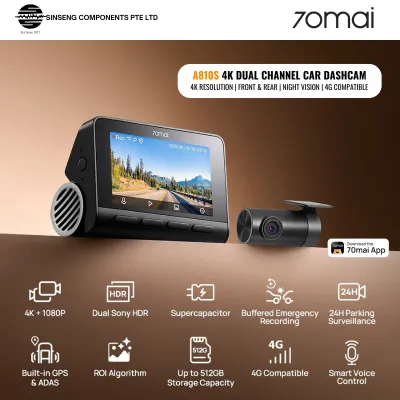
Prices are valid at publication and may change. Please refer to the product page for the latest price.
The physical mounting position of your dash cam is critical for compliance. The camera must be positioned so it does not obstruct the driver’s forward view of the road. Typically, this means mounting the unit behind or adjacent to the rearview mirror, within the swept area of the windscreen wipers to ensure clear footage during rain, but completely outside the driver’s direct line of sight.
If the dash cam features an integrated display screen, like the one on the 70mai A810S, it must not display distracting content or live video playback while the vehicle is in motion. Most compliant devices feature an automatic screen-saver or auto-off function that darkens the display shortly after the engine starts. This prevents driver distraction and ensures compliance with local traffic safety guidelines.
Singapore’s tropical climate means cabin temperatures can rise significantly when parked outdoors. Ensure any dash cam you select carries recognized international safety certifications on its packaging, indicating the internal power components have undergone thermal and electrical safety testing. These certifications help verify that the device can operate safely under intense heat without risking electrical faults.
Core Feature Comparison: 70mai A810S vs. Market Alternatives
The 70mai A810S is marketed with a high-resolution image sensor designed to capture fine details like license plates in low-light conditions. When comparing this to alternative models, verify the specific sensor model and native resolution listed on the manufacturer’s spec sheet. High-resolution sensors offer superior digital zoom clarity, but they also generate more heat and consume more storage space than standard alternatives.

High-resolution recording also demands high-endurance microSD cards. Because the 70mai A810S writes large amounts of data continuously, using a standard memory card can lead to premature card failure. Always verify the card’s write-cycle rating and ensure it is rated for high-endurance use in hot environments to avoid losing critical footage.
Parking surveillance is a highly sought-after feature in Singapore’s busy multi-storey and open-air car parks. The 70mai A810S and similar premium models offer time-lapse or motion-activated recording while parked. However, these features cannot run indefinitely on the camera’s internal power source. You must verify if the camera requires a dedicated hardwire kit with an integrated low-voltage cutoff to protect your car’s primary battery from draining.
Because Singapore experiences consistent high temperatures year-round, thermal management is a critical differentiator. Check the manufacturer’s operating temperature range before purchasing. Devices utilizing supercapacitors generally offer a higher thermal threshold and longer lifespan under direct sunlight compared to those relying on traditional lithium-ion batteries, which can degrade or swell over time when exposed to extreme cabin heat.
Installation, Power Supply, and Smart Feature Limits
Drivers must choose between a simple cigarette lighter adapter and a permanent hardwire installation. While a cigarette lighter connection is easy to install yourself, it only provides power when the ignition is on, disabling parking surveillance features. A hardwire kit connects directly to the vehicle’s fuse box, allowing for continuous power management and cleaner cable routing behind the interior trim panels.
For hardwiring, professional installation is highly recommended, especially for modern vehicles equipped with complex electrical systems, advanced driver assistance systems (ADAS), and side curtain airbags. Improperly routed cables can obstruct airbag deployment paths or void your vehicle’s manufacturer warranty. A qualified technician can identify the correct fuses to tap, ensuring the dash cam shuts down before the car battery drops below a safe starting voltage.
When routing cables, avoid running them directly across the path of side curtain airbags located in the A-pillars. Professional installers typically route the cables behind the airbag modules to ensure that if the airbags deploy, the cables do not interfere with their inflation or pull the camera loose. This attention to detail is vital for maintaining the vehicle’s original safety ratings.
Many modern dash cams, including the 70mai A810S, feature camera-based Advanced Driver Assistance Systems (ADAS) that provide lane departure warnings or forward collision alerts. It is vital to understand that these camera-based systems rely entirely on visual algorithms and precise physical alignment. They are designed as secondary convenience features and cannot replace the dedicated radar, lidar, or ultrasonic safety sensors built into your vehicle by the manufacturer.
Decision Framework: Which Dash Cam Fits Your Needs?
The 70mai A810S is highly suitable if your primary goal is capturing maximum detail during daytime and nighttime driving, and you plan to install a hardwire kit to utilize its advanced parking modes. Its high-resolution sensor is ideal for drivers who frequently commute on busy expressways where capturing distant license plates is crucial.
If you drive a hybrid or electric vehicle with sensitive 12V battery systems, or if you park exclusively in shaded, secure garages, you might prefer alternative screenless or supercapacitor-based models that draw less standby power. Additionally, if you require comprehensive coverage inside the cabin, look for specialized multi-channel systems that include an interior-facing infrared camera.
Before finalizing your purchase, inspect your vehicle’s front windshield. Many modern cars in Singapore are fitted with aftermarket solar films or thermal tints to combat the heat. Some heavy metallic tints can degrade GPS signal reception for dash cams with built-in GPS modules, or interfere with the adhesive mounts. Ensure the mounting area is thoroughly cleaned and compatible with electrostatic stickers or high-temperature adhesive pads to prevent the camera from falling off during hot afternoons.
Frequently Asked Questions (FAQ)
Do I need to register my dash cam with local traffic authorities?
No, individual car owners in Singapore do not need to register their personal dash cams with the Land Transport Authority (LTA) or any other traffic authority. However, the device must be installed in a manner that complies with standard vehicle safety regulations. This means it must not block the driver’s view, must be securely mounted so it does not become a projectile in an accident, and must not display moving video on a screen visible to the driver while the vehicle is in motion. If you operate a commercial vehicle or a public service vehicle, check with your fleet operator for any specific internal policies regarding recording devices.
How does extreme heat affect dash cam batteries and capacitors?
Extreme heat is the primary cause of premature dash cam failure in tropical climates like Singapore. Traditional lithium-ion batteries are sensitive to high temperatures; prolonged exposure to direct sunlight through a windshield can cause them to degrade, lose capacity, swell, or in rare cases, pose a safety hazard. Supercapacitors, on the other hand, do not store energy chemically and are much more resilient to thermal stress. They are designed to provide just enough power to safely save the current video file when the vehicle is turned off, making them a highly reliable choice for vehicles parked outdoors in hot climates.
Community discussion
Share your experience or ask a question. Comments are reviewed before publication.