
Navigating the busy roads of Singapore requires constant vigilance, making a reliable dash cam an essential safeguard for any motorist. Whether you are protecting your insurance excess under the Barometer of Responsibility Agreement (BORA) or simply documenting your daily commute, having clear, uninterrupted footage is crucial. The 70mai A800SE has emerged as a popular contender in the local market, but choosing the right device involves comparing it against other Land Transport Authority (LTA) compliant options. The ideal choice depends on your vehicle’s specific configuration, your parking surveillance needs, and how well the device handles Singapore’s demanding tropical climate.
Quick Verdict: Is the 70mai A800SE the Right Choice for Your Vehicle?
For most drivers in Singapore, a high-resolution front-and-rear dash cam setup like the 70mai A800SE offers a strong balance of video clarity and coverage. It is particularly well-suited for private car owners who prioritize capturing crisp license plate details during both day and night driving. The dual-channel recording capability ensures that tailgating incidents or rear-end collisions are documented with equal clarity, providing robust evidence for insurance claims.
However, before finalizing your purchase, you must verify that the physical dimensions of the camera and its mounting bracket are compatible with your vehicle’s windshield angle and do not obstruct your line of sight. Furthermore, if you operate a private hire vehicle (PHV) or a taxi, you may need to look at alternative brands that offer specialized inward-facing cabin cameras with infrared night vision to comply with passenger safety and privacy regulations. Fleet operators should also consider alternative systems that provide integrated cloud tracking and centralized management features, which are typically outside the scope of consumer-focused models like the A800SE.
Products mentioned in this guide
![[2026 NEW] 70mai A810 Lite Dashcam 4K Resolution + HDR | 4G Connectivity | Supercapacitor | Built-in GPS | Dual Recording](https://img.lazcdn.com/g/p/dde058960afcc39bbcd48d9d52298a3d.png_400x400q80.png_.webp)
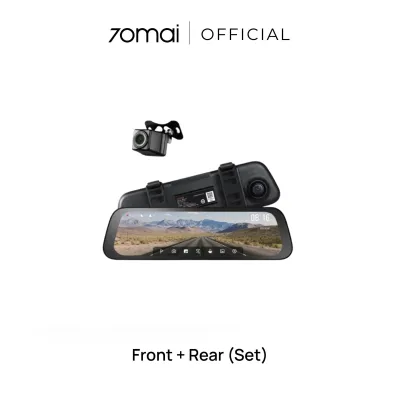
Prices are valid at publication and may change. Please refer to the product page for the latest price.
What Makes a Dash Cam LTA-Compliant in Singapore?
In Singapore, the Land Transport Authority (LTA) maintains strict guidelines regarding any aftermarket accessories installed on a vehicle’s windscreen. The primary concern is driver visibility. Any dash cam mounted on the front or rear windshield must not obstruct the driver’s direct line of sight or interfere with the safe operation of the vehicle. Generally, this means the camera should be installed behind or adjacent to the rearview mirror, within the area swept by the windscreen wipers, but positioned so that it remains out of the driver’s primary field of view.

The rules differ significantly when comparing private passenger cars to commercial or private hire vehicles. For private cars, outward-facing cameras are the standard, and there are fewer restrictions on audio recording within the cabin. However, for PHVs and taxis, any inward-facing camera must comply with strict Personal Data Protection Act (PDPA) guidelines and LTA regulations. These include displaying prominent warning decals on the windows to inform passengers that recording is in progress, and ensuring that the recorded data is secure and only accessible under authorized conditions.
Before purchasing any dash cam online or from a local retailer, use this checklist to verify compliance:
- Physical Footprint: Ensure the device is compact enough to fit behind your rearview mirror without hanging down into your primary field of view.
- Mounting Mechanism: Opt for adhesive mounts rather than large suction cups, as adhesive mounts tend to be more low-profile and less likely to detach under intense heat.
- Local Certification: Verify that the device carries the necessary regulatory marks for electronic interference, ensuring it will not disrupt your vehicle's onboard diagnostic systems or safety sensors.
Key Comparison Dimensions: 70mai A800SE vs Alternative Brands
When comparing the 70mai A800SE against other brands available in Singapore, it is important to look past marketing buzzwords and focus on verifiable technical specifications. Manufacturer spec sheets provide the raw data needed to make an objective comparison based on your specific driving habits.
Image Sensor, Resolution, and Low-Light Performance
Video clarity is the most critical aspect of any dash cam, as blurry footage is virtually useless during an insurance dispute. When evaluating options, check whether the advertised resolution is “native” or “interpolated.” Native resolution refers to the actual pixel count of the image sensor, whereas interpolated resolution uses software algorithms to stretch a lower-resolution image, often resulting in pixelation and loss of detail.
Low-light performance is heavily influenced by the image sensor model and the lens aperture. Look for reputable sensor brands, such as the Sony Starvis series, which are specifically engineered for enhanced low-light sensitivity. The aperture size, indicated by an f-number (such as f/1.8 or f/1.6), determines how much light reaches the sensor; a lower f-number indicates a wider aperture, which performs better in poorly lit areas, multi-story carparks, or during heavy monsoon downpours. Additionally, ensure the camera features Wide Dynamic Range (WDR) or High Dynamic Range (HDR) to balance extreme lighting contrasts, such as exiting a dark tunnel into bright sunlight.
To support high-resolution recording without data corruption, you must also check the storage requirements. High-resolution footage requires high-endurance microSD cards with a minimum speed rating of Class 10, U3, or V30. Using a standard memory card can lead to frequent write errors, frame drops, and premature card failure due to the constant write cycles.
Advanced Driver Assistance and Parking Surveillance
Many modern dash cams, including the 70mai A800SE, offer Advanced Driver Assistance Systems (ADAS) such as lane departure warnings and forward collision alerts. These features rely on real-time image processing and often require an integrated GPS module to function accurately. When comparing brands, verify if the GPS is built into the main unit or if it requires an external antenna accessory. A built-in GPS is generally preferred for a cleaner installation and more reliable speed and location logging.
Parking surveillance is another crucial feature, especially in Singapore’s crowded public carparks. To monitor your vehicle while the ignition is off, the dash cam must transition to parking mode. This feature cannot run on the camera’s internal battery alone for extended periods; it requires a dedicated hardwire kit connected directly to the vehicle’s fuse box. When comparing hardwire kits, ensure they feature built-in low-voltage protection. This feature is designed to cut power to the dash cam if the car battery’s voltage drops below a specific threshold (typically 11.8V or 12V), helping to prevent you from finding yourself with a dead battery.
Different brands offer varying parking mode recording methods:
- Time-Lapse Recording: Captures photos at set intervals (e.g., one frame per second), compressing hours of parking into a short, easily reviewable video.
- Motion Detection: Triggers recording only when movement is detected within the camera's field of view, saving storage space but potentially missing the initial moments of an incident.
- Impact Detection: Keeps the camera in a low-power standby state and begins recording only when the internal G-sensor detects a physical shock or collision.
Installation, Power Delivery, and Heat Tolerance
Singapore’s tropical climate poses a significant challenge for automotive electronics. A car parked in an open-air carpark under direct sunlight can experience cabin temperatures exceeding 60°C. Therefore, heat tolerance is a primary consideration when choosing a dash cam.
You must check the operating temperature range specified by the manufacturer. Dash cams generally use one of two power storage technologies: lithium-ion batteries or supercapacitors. Lithium-ion batteries are highly sensitive to heat; prolonged exposure to high temperatures can cause them to swell, degrade rapidly, or even pose a safety hazard. In contrast, supercapacitors are far more resilient to extreme heat, offering better longevity and safety in tropical environments. If you frequently park in unsheltered areas, prioritizing a capacitor-based model is highly recommended.
Power delivery and installation methods also impact the device’s performance and safety. A simple plug-and-play installation using the vehicle’s cigarette lighter socket is easy to set up but leaves visible wires hanging across the dashboard and disables parking mode when the engine is turned off. A professional hardwire installation routes the cables behind the interior trim panels and connects directly to the fuse box.
When routing cables, care must be taken to ensure they do not cross or interfere with the deployment path of the vehicle’s side curtain airbags. For complex electrical systems or modern hybrid and electric vehicles, professional installation by a qualified technician is strongly advised to prevent damage to the vehicle’s wiring harness and avoid voiding the manufacturer’s warranty.
Decision Framework: Choosing the Best Fit for Your Driving Needs
To help you finalize your decision, use the following structured framework to match a dash cam to your specific driving scenario.
Choose the 70mai A800SE if…
- You want a high-resolution front-and-rear recording system that captures clear details in various lighting conditions.
- You require a supercapacitor-powered device that can reliably withstand Singapore's high cabin temperatures when parked outdoors.
- You appreciate smart features like integrated GPS logging and basic ADAS alerts without needing complex enterprise fleet integrations.
Choose an alternative brand if…
- You operate a commercial fleet or a private hire vehicle and require specialized features such as real-time cloud uploads, remote live-viewing, or tamper-proof SD card slots.
- You need a dedicated inward-facing cabin camera with infrared LEDs to record passengers clearly in complete darkness.
- You prefer a screenless, ultra-compact design that mounts completely out of sight behind the rearview mirror.
Verify first if…
- Your vehicle's front windshield has a heavy metallic solar film or tint, which can sometimes degrade GPS signal reception or affect video clarity.
- Your vehicle's auxiliary power outlets provide the correct voltage and amperage required by the dash cam's power adapter.
- The physical mounting angle of the camera bracket allows for proper alignment on your specific vehicle's windshield slope without violating LTA visibility guidelines.
Frequently Asked Questions (FAQ)
Does the 70mai A800SE need a hardwire kit for parking mode?
Yes, to utilize the parking surveillance features of the 70mai A800SE when your vehicle is turned off, you must install a compatible hardwire kit. This kit connects the dash cam directly to your vehicle’s fuse box, allowing it to draw continuous power from the car battery. It is essential to use the manufacturer’s official hardwire kit, which includes an integrated low-voltage cutoff mechanism. This safety feature monitors your car battery’s voltage and automatically shuts off power to the dash cam if the battery level drops too low, helping to prevent your vehicle’s battery from draining completely.
How do I verify LTA compliance before purchasing online?
To verify LTA compliance when shopping on online marketplaces, start by reviewing the physical dimensions and mounting design of the dash cam. Ensure it is compact enough to be installed behind your rearview mirror without obstructing your forward field of vision. Avoid models with excessively large screens or bulky brackets that extend into your primary line of sight. Additionally, look for products sourced from authorized local distributors in Singapore, as they typically ensure the devices comply with local electronic standards and provide valid warranty support.
Community discussion
Share your experience or ask a question. Comments are reviewed before publication.