
Maintaining your vehicle’s exterior finish requires understanding the distinct roles of different detailing products. While many car owners seek a single solution for a glossy, protected finish, the truth is that 3M Wash and Wax, traditional polish, and ceramic coatings serve entirely different purposes. 3M Wash and Wax is a dual-action maintenance product that cleans your vehicle while leaving behind a thin, temporary layer of sacrificial wax. Traditional polish, on the other hand, is an abrasive corrective compound designed to physically level your clear coat and remove surface defects, offering no protective qualities of its own. Ceramic coating represents a semi-permanent chemical bond that cures over your paintwork to deliver a highly durable, long-lasting barrier against environmental contaminants.
Choosing the right approach for your vehicle depends on your specific goals, your available time, and the current condition of your paint. If you are looking for a quick, budget-friendly way to maintain basic water beading and clean your car in a single step, a wash-and-wax formula is highly convenient. If your paint suffers from swirl marks, oxidation, or light scratches, you will need a traditional polish to restore optical clarity before applying any protective layer. For those seeking maximum environmental shielding and are willing to invest the necessary time or money upfront, a ceramic coating provides a highly durable long-term solution. Understanding how these methods interact and differ is the first step toward establishing an effective car care routine.
Understanding What Each Product Actually Does to Your Paint
To make an informed decision, you must first distinguish between cleaning, correcting, and protecting your vehicle’s clear coat. The clear coat is the topmost layer of paint on your car, designed to shield the colored base coat from damage while providing a deep, reflective shine. Many car owners mistakenly believe that polishing adds a layer of protection, or that a wash-and-wax product can repair physical paint damage. In reality, each of these solutions interacts with your clear coat in fundamentally different ways.
Products mentioned in this guide
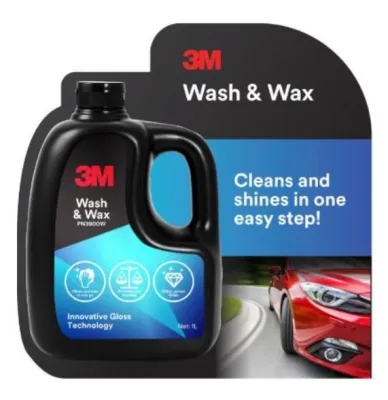
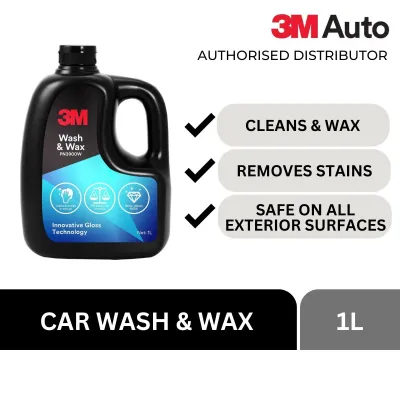
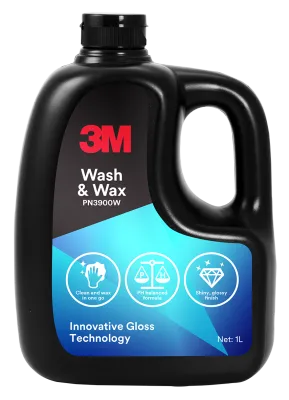
![[3M Bundle] 3M Wash & Wax + 2 x Leather & Vinyl Restorer + 3M Car Detailing Cloth](https://img.lazcdn.com/g/p/mdc/3a433e162c698788e5b68dfacf2402b2.png_400x400q80.png_.webp)
Prices are valid at publication and may change. Please refer to the product page for the latest price.
A wash-and-wax product, such as 3M Wash and Wax, is formulated primarily as a routine maintenance shampoo. As you wash away road grime, dirt, and dust, the soap suspends these particles to prevent scratching while depositing a very thin layer of wax onto the surface. This wax layer is designed for basic water beading and a temporary boost in gloss, acting as a light, sacrificial barrier. It does not bond deeply with the paint, nor does it alter the physical structure of the clear coat. Instead, it simply sits on top of the surface, filling in microscopic pores to create a temporary hydrophobic effect.
Traditional polish is an entirely different category of product that contains microscopic abrasives. Its primary purpose is paint correction rather than protection. When applied by hand or with a machine, the abrasives in the polish gently shave down a microscopic layer of the clear coat to level out imperfections like swirl marks, light scratches, and oxidation. Because polish is designed to remove material to create a smooth, reflective surface, it leaves the paint completely bare and vulnerable to the elements once wiped away. Polishing does not add any shine on its own; rather, it reveals the natural gloss of a smooth clear coat.
Ceramic coatings represent the most advanced form of paint protection currently available to consumers and professionals. These liquid polymer solutions typically contain silicon dioxide or silicon carbide compounds that chemically bond with your vehicle’s factory clear coat. Once cured, the coating forms a semi-permanent, glass-like layer that is significantly harder than traditional waxes or sealants. This barrier does not wash off easily and provides a continuous shield against environmental hazards, preventing contaminants from making direct contact with your paint.
Comparing Protection Levels and Maintenance Cycles
The level of environmental protection and the frequency of application vary dramatically among these three options. Evaluating these differences allows you to align your car care routine with your lifestyle and the climate conditions your vehicle faces daily, especially in hot, humid regions with intense UV exposure and frequent rain.

Wash-and-wax formulas offer the shortest protection cycle, typically lasting only a few weeks or until the next major rainstorm or wash. The hydrophobic effect—where water beads up and rolls off the surface—is temporary because the wax molecules merely sit on top of the clear coat without forming a strong chemical bond. This means you must use the product regularly during your routine washes to maintain the protective layer and keep the paint looking glossy. It is an excellent option for maintaining an existing wax base, but it cannot replace long-term sealants.
Traditional polish offers absolutely zero ongoing protection once the residue is wiped clean from the panel. Its sole duty is to prepare the surface by restoring optical clarity and removing defects. If you polish your vehicle and fail to follow up with a dedicated wax, synthetic sealant, or ceramic coating, your bare clear coat will quickly degrade under UV exposure, road salt, and acid rain. Polishing is therefore a preparatory step rather than a standalone maintenance solution, and it should always be followed by a dedicated protective layer.
Ceramic coatings provide the highest level of protection and the longest maintenance cycles, often lasting for several years when properly applied and maintained. The chemical bond formed by a ceramic coating resists UV rays, chemical etching from bird droppings or tree sap, and minor wash-induced marring. However, real-world durability is highly dependent on environmental factors, garage parking, and your washing techniques. To verify the expected lifespan of any coating, always check the manufacturer’s specific product labels for curing requirements, wash-count limits, and recommended maintenance intervals.
Weighing the Costs, Time, and Application Effort
Achieving a pristine finish requires balancing your financial budget against the physical effort and time you are willing to invest. Each method carries distinct requirements for surface preparation, application tools, and labor.
Using a wash-and-wax product is the most accessible and cost-effective option for beginners and busy car owners. It requires no specialized equipment beyond a standard wash mitt, two buckets, and a drying towel. The application process adds virtually no extra time to your regular washing routine, as the protective wax is deposited while you clean and rinse the vehicle. This makes it an ideal choice for those who want quick results with minimal physical exertion and low upfront costs.
Polishing your vehicle demands a moderate financial investment and a high level of physical effort. While hand polishing is possible for small areas, achieving uniform results across an entire vehicle usually requires a dual-action orbital polisher, a selection of foam or microfiber pads, and high-quality polishing compounds. The process is time-consuming, often taking several hours or an entire weekend, as you must carefully work section by section, tape off plastic trim to prevent staining, and follow up with a dedicated protective sealant.
Ceramic coatings require the highest upfront investment in both time and preparation. Before applying a coating, the paint must be thoroughly washed, decontaminated with a clay bar, polished to remove defects, and wiped down with an isopropyl alcohol solvent to ensure a completely bare surface. Applying the coating itself requires precise, section-by-section application to avoid high spots—areas where excess product cures into an uneven, cloudy finish. Because of these strict requirements and the need for a controlled, dust-free curing environment, professional application is highly recommended to prevent bonding failures or voiding product warranties.
How to Choose the Right Method for Your Car Care Routine
Selecting the most suitable approach depends on your vehicle’s current paint condition, your detailing experience, and how much effort you want to put into ongoing maintenance. Use the following guidelines to determine which path fits your needs.
Choose 3M Wash and Wax if you prioritize convenience and are looking for a simple, budget-friendly way to maintain basic gloss and water repellency. This product is highly suitable for daily drivers that are washed frequently, allowing you to clean and protect the paint in a single step without dedicating hours of labor to detailing. It is also an excellent choice for maintaining a vehicle that already has a base layer of wax or sealant.
Choose traditional polish followed by a dedicated wax or sealant if your vehicle’s paint has visible swirl marks, light scratches, or a dull, oxidized appearance. Polishing is the only way to physically correct these defects and restore the paint’s deep reflection. Once the surface is corrected, you must apply a dedicated protective layer to lock in the results and prevent the bare clear coat from deteriorating.
Choose a ceramic coating if you want long-term chemical resistance, easier routine washing, and maximum protection against environmental contaminants. This option is ideal for those who plan to keep their vehicle for several years and are willing to invest the necessary time or money upfront for a semi-permanent shield. It is particularly beneficial for vehicles parked outdoors that are exposed to harsh weather and UV rays.
Before applying any of these products, always inspect your vehicle’s paintwork carefully. If your car has a failing clear coat, deep scratches that penetrate down to the primer or metal, or a previous coating that is peeling, do not attempt to apply new products over these areas. These conditions require a professional assessment and potential paint repair before any detailing or protective products can be safely used.
Frequently Asked Questions (FAQ)
Can I apply a ceramic coating over a wash and wax?
No, you cannot apply a ceramic coating directly over a wash and wax. Ceramic coatings require a completely bare, decontaminated clear coat to establish a proper chemical bond. The wax residues, oils, and surfactants left behind by a wash-and-wax product will act as a barrier, preventing the coating from adhering to the paint and leading to premature failure. Before coating your vehicle, you must strip away all existing waxes and sealants using a dedicated strip shampoo, a clay bar, and an alcohol-based prep spray.
Does 3M Wash and Wax remove light scratches like a polish?
No, 3M Wash and Wax does not remove light scratches. Wash-and-wax products are non-abrasive formulas designed to clean the surface and deposit a temporary layer of wax. While the wax may temporarily fill in and mask extremely minor micro-marring, making the paint look slightly smoother, it does not physically correct the clear coat. To permanently remove scratches, swirl marks, or oxidation, you must use a traditional polish containing specialized abrasives that level the surrounding clear coat.
How do I maintain a ceramic coating during regular washes?
To preserve the lifespan and hydrophobic properties of a ceramic coating, you should wash your vehicle using a pH-neutral car shampoo that does not contain added waxes, gloss enhancers, or sealants. Using a wash-and-wax formula on a ceramic-coated vehicle can actually degrade its performance, as the temporary wax layer will cover the highly hydrophobic coating and attract more dust. Always follow the coating manufacturer’s instructions, and use only their recommended maintenance sprays or toppers to refresh the surface when needed.

Community discussion
Share your experience or ask a question. Comments are reviewed before publication.